
Affiliate Marketing Terms Beginners Should Know
Affiliate marketing becomes much easier to understand when you know the basic terms.
Many beginners feel confused, not because affiliate marketing is difficult, but because the language can feel unfamiliar at first. Words like commission, cookie duration, payout, tracking, EPC, attribution, and disclosure may sound technical, especially when you are just getting started.
The good news is that you do not need to learn everything at once.
You only need to understand the most important affiliate marketing terms well enough to make informed decisions, choose programs more carefully, and create content with greater confidence.
Whether you are exploring your first affiliate program or learning how affiliate marketing works, understanding these terms will help you navigate the industry more effectively. If you are completely new to the topic, you may also find our guide on How Affiliate Marketing Works in Practice helpful before continuing.
Choosing the right program is another important step. Before joining any program, consider reading Choose Your First Affiliate Program Safely to better understand what to look for as a beginner.
In this guide, we will explain the key affiliate marketing terms beginners should know in a simple and practical way.
Table of Contents
Why Affiliate Marketing Terms Matter for Beginners
Affiliate marketing is not only about sharing links.
It is a business model based on trust, content, tracking, and clear agreements between the affiliate, the company, and the customer.
When beginners do not understand the basic terms, they may join the wrong programs, misunderstand how commissions work, or promote offers without knowing the rules. This is one reason why choosing a program carefully is important. If you are still evaluating your options, you may find Choose Your First Affiliate Program Safely helpful.
Learning the language helps you slow down and ask better questions before you join or recommend anything.
For example, if you understand what cookie duration means, you will know how long your referral may be tracked after someone clicks your link. If you understand payout terms, you will know when and how commissions may be paid. If you understand disclosures, you will know why transparency matters when you include affiliate links in your content.
These terms are not just technical details.
They help you protect your credibility and build a stronger long-term foundation.
Basic Affiliate Marketing Terms
Before you compare programs or create content, it helps to understand the core words used in affiliate marketing.
Affiliate Marketing

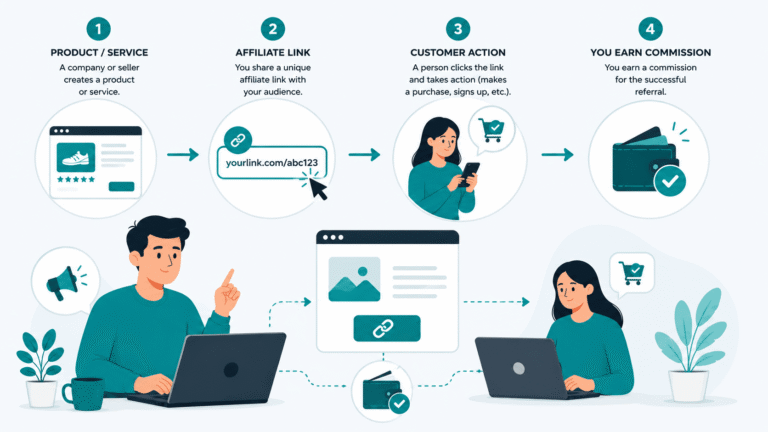
Affiliate marketing is a model where you recommend a product or service and may earn a commission when someone takes a qualifying action through your affiliate link.
That action could be a purchase, sign-up, free trial, subscription, or lead, depending on the program.
A simple example:
You write a helpful article about a tool. You include your affiliate link. A reader clicks your link and buys the tool. If the sale meets the program’s rules, you may earn a commission.
Affiliate marketing works best when the recommendation is relevant, honest, and useful to the reader.
Affiliate

An affiliate is the person or business that promotes a product or service through a special tracking link.
As an affiliate, your role is not just to “sell.” Your real role is to help the right audience understand whether a product, service, or tool may be useful for them.
A beginner-safe affiliate approach focuses on education first and promotion second.
Affiliate Program

An affiliate program is the system a company uses to work with affiliates.
The program explains what you can promote, how commissions are calculated, what rules you must follow, and how payments are handled.
Before joining any affiliate program, beginners should check:
the product fit,
the commission structure,
the cookie duration,
the payout rules,
the allowed traffic sources,
and the program’s reputation.
If the terms are unclear, it is better to slow down and research more before promoting the offer.
Affiliate Link

An affiliate link is a special tracking link given to you by an affiliate program.
This link helps the company identify that a visitor came through your recommendation.
A normal link may look like a standard website URL. An affiliate link often includes tracking parameters, IDs, or referral codes.
For example, an affiliate link may track:
who referred the visitor,
When the click happened,
which product page was visited,
and whether the visitor completed a qualifying action.
You should always use affiliate links responsibly and disclose them clearly.
Referral Link

A referral link is similar to an affiliate link.
It is a tracked link that identifies the person who referred a customer or user.
Some companies use the term affiliate link. Others use a referral link. In many beginner contexts, the idea is similar: the link connects a recommendation to a tracked action.
The important point is that the link is not just a normal link. It is connected to a tracking system.
Tracking
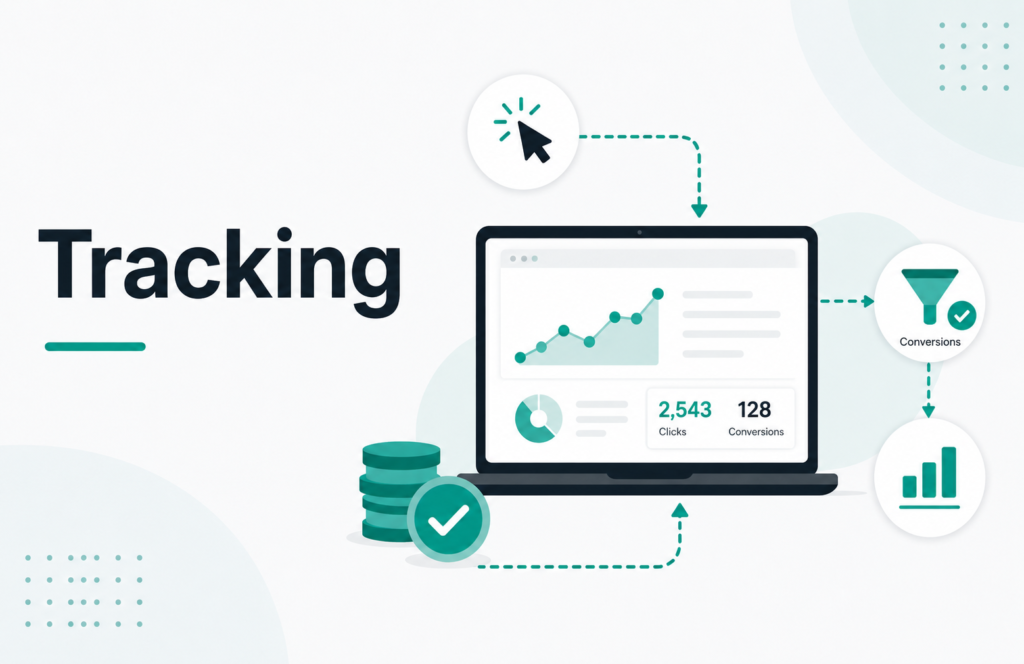
Tracking is the process that helps an affiliate program connect a click, sign-up, or sale to the correct affiliate.
Tracking may happen through cookies, referral IDs, tracking links, pixels, dashboards, or affiliate platforms.
Good tracking is important because it affects whether commissions are recorded correctly.
Beginners should understand that tracking is not always perfect. Browser settings, expired cookies, attribution rules, refunds, and program policies can all affect whether a commission is approved.
Payment and Performance Terms
Once you understand the basic affiliate marketing terms, the next step is learning how affiliate earnings and performance are measured.
The following terms will help you understand commissions, payouts, conversions, and other metrics commonly used in affiliate programs.
Commission Rate
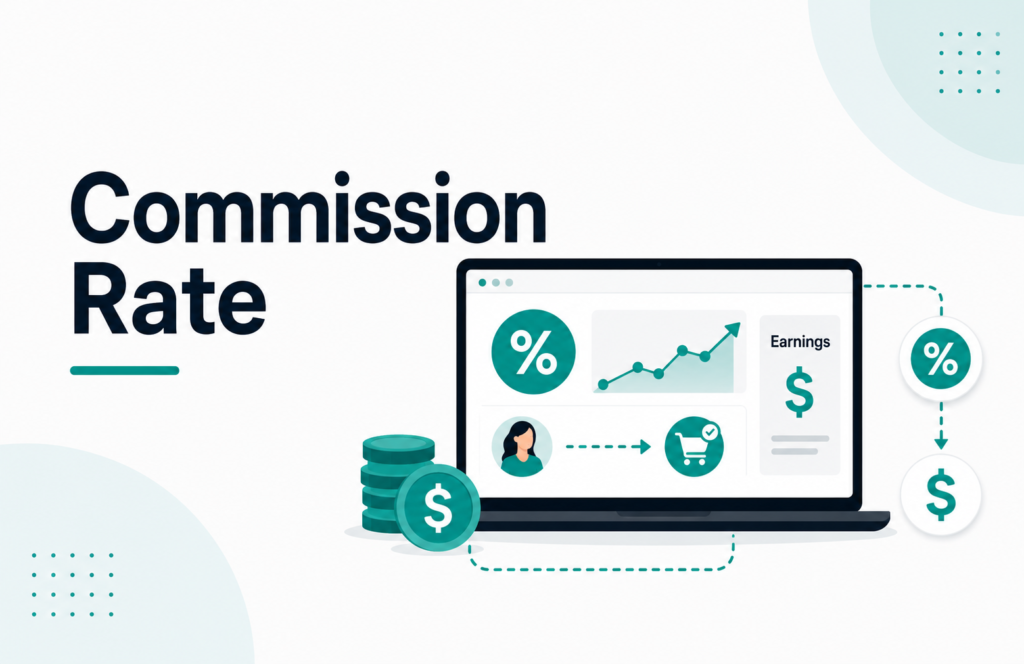
The commission rate tells you how much you may earn from a qualifying referral.
For example:
A program may offer 20% per sale.
Another program may offer $50 per approved customer.
Another may offer recurring commissions for monthly subscriptions.
Beginners should not choose a program only because the commission rate is high. It is also important to check whether the product is useful, whether the company is trustworthy, and whether the terms are clear.
Payout

Payout means the process of receiving your approved affiliate earnings.
A program may approve commissions first and then pay them later according to its payment schedule.
For example, payments may be made monthly, after a refund period, or only after you reach a minimum payout amount.
Before joining a program, check:
when payouts are made,
how payouts are made,
what the minimum payout is,
whether commissions can be reversed,
and whether there is an approval or refund period.
Minimum Payout
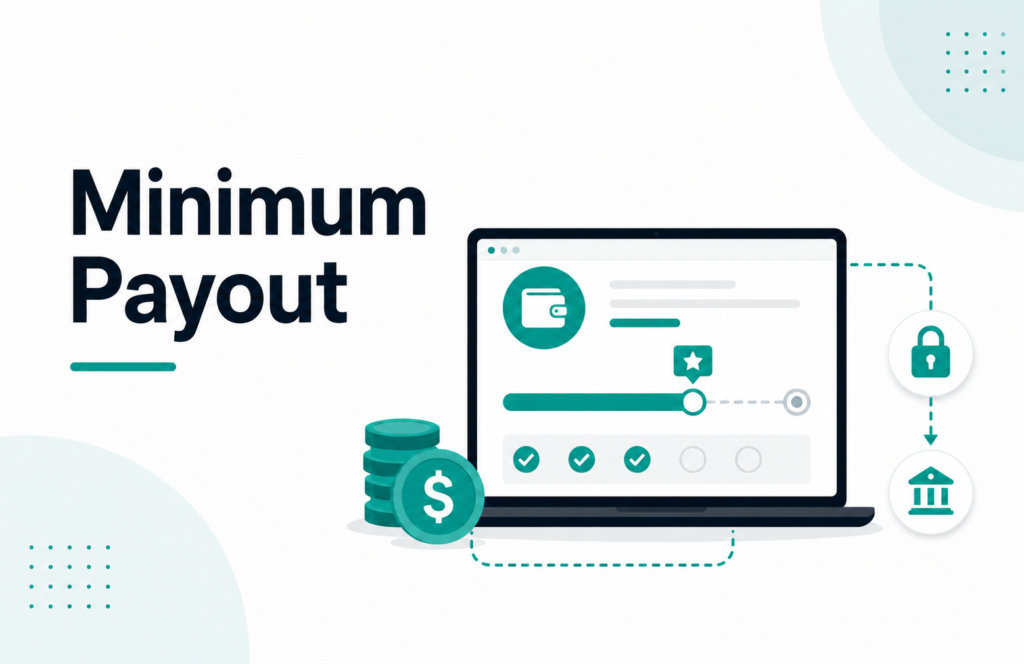
Minimum payout is the amount you must earn before the affiliate program sends payment.
For example, a program may require you to earn at least $50 before payment is released.
This is important for beginners because early earnings may be small. If the minimum payout is high, it may take longer to receive your first payment.
This does not automatically mean the program is bad. It simply means you should understand the payment rules before joining.
Recurring Commission

A recurring commission means you may earn more than once from the same referred customer, usually while the customer continues paying for a subscription.
For example, if you refer someone to a monthly software tool, you may earn a commission each month while that person remains a customer.
Recurring commissions can be attractive, but beginners should still check the product quality, cancellation rules, payout terms, and program reliability.
A recurring commission is only valuable if the product genuinely helps people and the program is trustworthy.
EPC
EPC stands for earnings per click.
It is a performance metric that shows how much affiliates may earn on average for clicks sent to a program.
For example, if a program has an EPC of $1, it means affiliates may earn an average of $1 per click based on past performance.
However, beginners should be careful with EPC.
EPC is not a promise. It can vary depending on the audience, content quality, traffic source, country, product price, and conversion rate.
A high EPC does not guarantee that you will earn the same result.
Conversion Rate
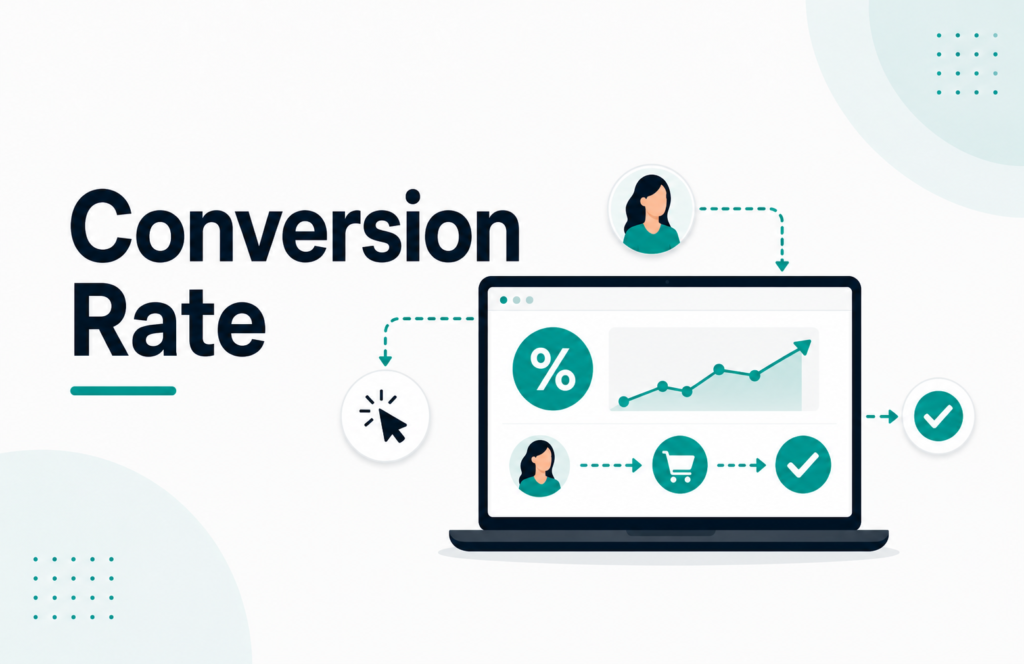
Conversion rate shows the percentage of people who take a desired action after clicking your affiliate link.
For affiliate marketing, this action could be buying a product, signing up, starting a trial, or submitting a form.
For example, if 100 people click your affiliate link and 3 people make a purchase, the conversion rate is 3%.
Conversion rate depends on many things:
– audience fit,
– content quality,
– product relevance,
– trust,
– price,
– sales page quality,
– and timing.
A strong affiliate strategy does not focus only on clicks. It focuses on helping the right people find the right solution.
Tracking and Cookie Terms
Tracking terms are important because they affect how referrals are counted and credited in affiliate marketing.
Cookie Duration
Cookie duration is the length of time a referral may be tracked after someone clicks your affiliate link.
For example, if a program has a 30-day cookie duration, the visitor may need to complete the qualifying action within 30 days for the referral to be credited.
Cookie duration can vary widely by program. Some programs may offer a short tracking window, while others may offer longer tracking periods.
Beginners should check cookie duration before joining a program, especially for products that require a longer decision-making process.
Attribution
Attribution means how the affiliate program decides which affiliate gets credit for a referral.
This can become important if a customer clicks links from multiple affiliates before buying or signing up.
Different programs may use different attribution rules. Some may use last-click attribution, while others may follow different rules based on the platform, campaign, or program agreement.
Attribution can affect commissions, so it is worth reading the program terms carefully.
Last Click
Last click means the final affiliate link clicked before the purchase or qualifying action may receive the commission.
For example, a person may read your article first, then later click another affiliate’s link before buying. If the program uses last-click attribution, the second affiliate may receive the commission.
This is one reason why affiliate tracking is not always simple.
Beginners should focus on building useful content and trust rather than trying to control every tracking detail.
Referral Window
Referral window is another way to describe the time period during which a referral can be credited.
It is closely related to cookie duration.
The referral window tells you how much time a customer may have to complete the action after clicking your link.
Always check the program’s official terms because referral windows can differ from one program to another.
Content and Trust Terms
Affiliate marketing works better when content is helpful, clear, and transparent.
Affiliate Disclosure
An affiliate disclosure is a clear statement that tells readers you may earn a commission if they buy or sign up through your affiliate links.
This is important because readers deserve to know when a recommendation may involve compensation.
A simple disclosure may say:
“This article may contain affiliate links. If you buy through these links, we may earn a commission at no extra cost to you.”
For additional guidance, you can also review the FTC’s Endorsement Guides, which explain how disclosures and material connections work in advertising and affiliate-style recommendations.
A good disclosure should be easy to notice, simple to understand, and placed before or near affiliate links.
Clear disclosure supports trust instead of weakening it.
Product Review
A product review is content that explains the features, benefits, limitations, pricing, and user experience of a product or service.
For beginners, product reviews should not be the first and only type of content.
Before writing many reviews, it is often better to build educational content first, such as:
- basic guides,
- comparison articles,
- checklists,
- mistakes to avoid,
- and beginner roadmaps.
A good review should help readers make a decision, not pressure them.
Comparison Content
Comparison content helps readers compare two or more products, programs, tools, or options.
For example, you might compare:
- program A vs program B,
- two website builders,
- two email tools,
- or two affiliate programs.
Comparison content can be very useful when it is fair, clear, and based on real criteria.
Beginners should avoid making every comparison only about commission or price. Trust, product fit, audience needs, and clear terms also matter.
Call to Action
A call to action, often called a CTA, is a sentence or button that encourages the reader to take the next step.
In affiliate content, a CTA might invite the reader to:
- read another guide,
- compare programs,
- check a product’s official page,
- download a checklist,
- or learn the basics first.
A beginner-safe CTA should not feel aggressive.
Instead of pushing readers, it should guide them naturally toward a helpful next step.
Program Rules Beginners Should Understand
Every affiliate program has rules. These rules matter because they affect how you can promote the product, where you can share your affiliate links, and when commissions may be approved or rejected.
Understanding program rules helps beginners avoid mistakes, protect their accounts, and build affiliate content more responsibly.
To learn more, you may also read Affiliate Marketing Mistakes Beginners Should Avoid
Approved Traffic Sources
Approved traffic sources are the places where you are allowed to promote affiliate links.
Some programs allow blog content, email newsletters, social media, or YouTube.
Others may restrict paid ads, coupon sites, direct linking, or certain traffic methods.
Before promoting a program, check where you are allowed to share your affiliate links.
Paid Ads Restrictions
Some affiliate programs restrict or prohibit paid advertising.
For example, a program may not allow affiliates to run paid ads using the company’s brand name.
This matters because violating paid ads rules can lead to rejected commissions or removal from the program.
Beginners should avoid paid ads until they clearly understand the program rules and their own budget risk.
Brand Bidding
Brand bidding means using a company’s brand name in paid search ads.
Many affiliate programs do not allow this because it can compete with the company’s own advertising.
For example, an affiliate may not be allowed to bid on the company’s name in Google Ads.
This is a technical rule, but beginners should know it exists.
If you do not plan to use paid ads, brand bidding may not matter right away. But it is still useful to understand the term before joining or promoting a program.
Refund Period
A refund period is the time during which a customer can request a refund.
Affiliate programs often wait until the refund period is over before approving or paying commissions.
This protects the company from paying commissions on refunded purchases.
For beginners, this means a commission may appear in your dashboard but still not be final.
Reversal
A reversal happens when a commission is removed or canceled.
This may happen because of:
- a refund,
- a canceled order,
- fraud prevention,
- duplicate tracking,
- invalid traffic,
- or a violation of program rules.
Reversals can be frustrating, but they are common in affiliate marketing.
The best protection is to promote relevant offers honestly and follow program terms carefully.
Beginner-Safe Glossary Table
Here is a simple glossary of important affiliate marketing terms for beginners.
| Term | Simple Meaning | Why It Matters |
|---|---|---|
| Affiliate Program | A company’s system for working with affiliates. | It explains the rules, commissions, and payment structure. |
| Affiliate Link | A tracked link used to connect your recommendation to a possible commission. | It helps the program identify your referral. |
| Commission | The amount you may earn from a qualifying action. | It shows how the affiliate program rewards referrals. |
| Cookie Duration | The time period during which a referral may be tracked after a click. | It affects whether a later purchase may still count. |
| Payout | The process of receiving approved affiliate earnings. | It tells you when and how you may be paid. |
| EPC | Earnings per click, based on average affiliate performance. | It can help compare programs, but it is not a guarantee. |
| Conversion Rate | The percentage of visitors who take the desired action. | It helps you understand how well traffic turns into results. |
| Disclosure | A clear statement that tells readers you may earn a commission. | It supports transparency and trust. |
| Attribution | The rule that decides which affiliate gets credit for a referral. | It affects commission tracking. |
| Reversal | A canceled or removed commission. | It explains why some commissions may not become final earnings. |
A company’s system for working with affiliates.
It explains the rules, commissions, and payment structure.
A tracked link used to connect your recommendation to a possible commission.
It helps the program identify your referral.
The amount you may earn from a qualifying action.
It shows how the affiliate program rewards referrals.
The time period during which a referral may be tracked after a click.
It affects whether a later purchase may still count.
The process of receiving approved affiliate earnings.
It tells you when and how you may be paid.
Earnings per click, based on average affiliate performance.
It can help compare programs, but it is not a guarantee.
The percentage of visitors who take the desired action.
It helps you understand how well traffic turns into results.
A clear statement that tells readers you may earn a commission.
It supports transparency and trust.
The rule that decides which affiliate gets credit for a referral.
It affects commission tracking.
A canceled or removed commission.
It explains why some commissions may not become final earnings.
Which Terms Should Beginners Learn First?
Beginners do not need to master every affiliate marketing term immediately.
Start with the terms that affect your first decisions:
- affiliate link,
- affiliate program,
- commission,
- cookie duration,
- payout,
- disclosure,
- conversion rate,
- and program rules.
These terms help you understand what you are joining, what you are promoting, and how to communicate honestly with your audience.
Once you understand the basics, you can slowly learn more advanced terms like EPC, attribution, recurring commissions, and brand bidding.
If you are still at the very beginning, you may also find How to Start Affiliate Marketing With No Experience helpful as a practical next step.
The goal is not to sound advanced.
The goal is to make better decisions.
Final Thoughts
Affiliate marketing becomes less confusing when you understand the language.
You do not need to know every advanced term before you begin, but you should understand the basics before joining programs or sharing links.
Terms like affiliate link, commission, cookie duration, payout, disclosure, conversion rate, and program rules are not just part of the vocabulary.
They help you protect your audience’s trust and build a safer foundation.
Start with the simple terms.
Read program rules carefully.
Choose offers that match your audience.
And remember: good affiliate marketing is not about rushing into promotion. It is about helping people make clearer decisions.
FAQ
What are affiliate marketing terms?
Affiliate marketing terms are the words used to describe how affiliate programs, tracking links, commissions, payments, disclosures, and performance metrics work.
What is an affiliate link?
An affiliate link is a special tracked link that identifies your referral. If someone takes a qualifying action through that link, you may earn a commission according to the program rules.
What does cookie duration mean in affiliate marketing?
Cookie duration is the length of time a referral may be tracked after someone clicks your affiliate link. For example, a 30-day cookie means the action usually needs to happen within 30 days to be credited.
What is an affiliate commission?
An affiliate commission is the amount you may earn when someone completes a qualifying action through your affiliate link, such as a purchase, sign-up, trial, or subscription.
What does payout mean in an affiliate program?
Payout means the process of receiving approved affiliate earnings. Programs may pay monthly, after a refund period, or only after you reach a minimum payout amount.
What is EPC in affiliate marketing?
EPC stands for earnings per click. It shows average earnings per click based on past affiliate performance, but it is not a guaranteed result.
Why is affiliate disclosure important?
Affiliate disclosure is important because it tells readers that you may earn a commission from affiliate links. Clear disclosure helps build transparency and trust.
Which affiliate marketing terms should beginners learn first?
Beginners should first learn affiliate link, affiliate program, commission, cookie duration, payout, disclosure, conversion rate, and program rules.