

How to Compare Affiliate Programs Before You Join: Beginner-Safe Checklist
Learning how to compare affiliate programs helps beginners avoid unclear offers, protect audience trust, and choose programs that fit their niche.
For beginners, it is very easy to look at the payout first and think, “This one pays more, so it must be better.”
But affiliate marketing does not work that way.
A program can offer a generous commission and still be a poor fit for your audience, difficult to explain honestly, unclear in its terms, or risky for your long-term credibility.
A beginner-safe affiliate program should be easy to understand, relevant to your niche, transparent in its rules, and connected to a product or service that can genuinely help people.
That is why comparing affiliate programs before you join matters so much.
In this guide, you will learn how to compare affiliate programs in a calm, practical, beginner-friendly way. The goal is not to find a “perfect” program. The goal is to avoid obvious mistakes, understand what you are joining, and choose offers you can recommend with confidence.
Table of Contents
In this guide
- Why You Should Compare Affiliate Programs Before You Join
- Start With Product Relevance
- Compare Commission Rates Carefully
- Check Cookie Duration
- Review Payout Terms
- Look at Brand Trust and Reputation
- Read the Affiliate Terms Carefully
- Check the Product Experience
- Watch for Red Flags
- Beginner-Safe Affiliate Program Comparison Checklist
- Example: Comparing Two Well-Known Affiliate Programs
- How Many Affiliate Programs Should Beginners Join?
- Where Affiliate Program Comparisons Fit in Your Content Plan
- Final Thoughts
- FAQ
Why You Should Compare Affiliate Programs Before You Join
Many beginners join affiliate programs too quickly.
They may see a high commission, a popular brand, or a strong sales page and assume the opportunity is good. But without slowing down and comparing the details, it is easy to miss important problems.
For example, a program may have:
- high commissions but unclear payout rules,
- a popular product but poor customer reviews,
- a long cookie duration but weak conversion,
- strong branding but strict promotion rules,
- a decent offer but no real affiliate support,
- or a product that simply does not fit your audience.
Affiliate marketing works best when your recommendations feel useful, clear, and trustworthy.
If you promote something only because it pays well, readers often feel that. Over time, that can damage trust.
Comparing programs helps you make slower, smarter decisions. It also helps you understand what kind of affiliate content makes sense for your site.
Before joining any program, ask yourself:
- Does this product fit my niche?
- Would it actually help my audience?
- Are the rules clear?
- Can I explain the product honestly?
- Would I feel comfortable recommending it to someone who trusts me?
If the answer feels unclear, it is usually better to pause.
A good affiliate program should make sense for your audience, your content, and your long-term brand.
Start With Product Relevance
The first thing to compare is not commission.
It is relevance.
A product can be excellent, but if it does not match your audience’s needs, it will be hard to recommend naturally.
For example, if your niche is beginner-friendly affiliate marketing, your audience may be looking for:
- basic education,
- website tools,
- content planning support,
- SEO basics,
- email marketing basics,
- trust and safety guidance,
- or simple productivity tools.
They probably do not need expensive enterprise software, advanced coaching, or complicated platforms at the beginning.
The question is not:
“Can I earn from this?”
The better question is:
“Does this help the reader solve a real problem?”
Product relevance matters because affiliate marketing works best when there is a clear connection between:
- the reader’s problem,
- the product’s purpose,
- your honest explanation,
- and a useful next step.
f those pieces do not connect, the recommendation can start to feel forced.
Before joining a program, ask:
- Who is this product for?
- What problem does it solve?
- Is that problem important to my audience?
- Is the product beginner-friendly?
- Can I explain it in simple words?
- Does it fit the content I already publish?
- Would it make sense inside my niche?
If the product is hard to connect to your content, it may not be the right fit yet.
And if you are still narrowing your direction, it helps to first read How to Choose a Niche for Affiliate Marketing.
Compare Commission Rates Carefully
Commission rate matters, but it should never be the only factor.
A commission is the amount you may earn when someone takes a qualifying action through your affiliate link. Depending on the program, that action could be a sale, sign-up, lead, trial, or subscription.
Some programs pay a percentage of the sale. Others pay a fixed amount. Some offer recurring commissions. Others pay only once.
At first, a high commission can look exciting. But a higher commission does not automatically mean a better program.
Sometimes a lower-paying program is actually the stronger option because:
- the product is trustworthy,
- the price is more reasonable,
- the audience understands it more easily,
- the conversion rate is stronger,
- the refund rate is lower,
- the support is better,
- and the terms are easier to understand.
A high-commission program may be riskier if:
- the product is overpriced,
- the sales claims are exaggerated,
- the brand has poor reviews,
- the terms are confusing,
- the audience does not trust it,
- or you do not understand the product well enough to recommend it properly.
Imagine two programs.
Program A pays 50% commission, but the product page is aggressive, the refund policy is unclear, and customer trust feels weak.
Program B pays 20%, but the product is useful, the terms are clear, customer support is visible, and the brand feels more reliable.
For a beginner, Program B may easily be the better choice.
Why?
Because trust is more valuable than a large commission that feels difficult to recommend honestly.
This is also one of the common mistakes beginners make in affiliate marketing: choosing offers by payout alone. If you have not read it yet, this article should connect naturally to your beginner mistake content.
Check Cookie Duration
Cookie duration is another important detail to compare.
A cookie is a small piece of tracking data that helps an affiliate program recognize that a visitor came through your link. Cookie duration simply means how long that tracking window lasts.
For example:
- A 24-hour cookie usually means the person needs to buy within 24 hours for you to get credit.
- A 30-day cookie gives the person more time.
- A 90-day cookie gives even more room for slower decisions.
A longer cookie duration can be helpful, especially for products that require more thinking before purchase.
But cookie duration should never be judged in isolation.
A long cookie is not especially useful if the product does not convert, the audience does not trust the brand, or the rules are unclear.
When comparing cookie duration, ask:
- How long is the cookie window?
- Does this product require quick or slow decision-making?
- Is the program using last-click or first-click attribution?
- Are there conditions that cancel tracking?
- Does the program explain attribution clearly?
For beginner audiences, decision-making is often slower. People may need time to compare, read reviews, watch tutorials, and think things through.
That is why cookie duration is worth checking carefully.
Review Payout Terms
Payout terms explain how and when you get paid.
This is one of the most important areas beginners should review before joining a program.
A program may sound attractive, but if the payout rules are unclear, delayed, or difficult to understand, it may not be beginner-friendly.
Minimum payout
Some programs require you to earn a certain amount before they pay you.
For example:
- $10 minimum payout
- $50 minimum payout
- $100 minimum payout
A higher threshold is not automatically a problem, but it can delay your first payment if you are just starting.
Payment schedule
Programs may pay:
- weekly,
- monthly,
- net-30,
- net-60,
- after the refund period,
- or after manual approval.
Net-30 usually means the payment is made around 30 days after the commission is approved. Net-60 means it may take around 60 days.
This matters because beginners often expect fast results. In reality, affiliate payments are usually slower than people think.
Payment methods
You should also check how the program pays.
Common methods include:
- PayPal,
- bank transfer,
- Payoneer,
- direct deposit,
- platform balance,
- or store credit.
Make sure the payment method works in your country and is practical for you.
Refund and approval periods
Some programs delay commission approval until the refund window has passed.
That is normal, but it should be explained clearly.
Before joining, check:
- What is the minimum payout?
- How often are commissions paid?
- Which payment methods are available?
- Are commissions approved automatically or manually?
- Is there a refund period?
- Can commissions be reversed?
- Are the payout rules easy to find?
Clear payout terms are one of the easiest signs that a program is more transparent.
If you cannot find basic payment information, be careful.
Look at Brand Trust and Reputation
Before joining an affiliate program, it is important to look at the brand behind the product.
A high commission can look attractive, but it is not enough by itself.
If the brand has poor reviews, unclear support, low product quality, or a weak reputation, it may be harder to build trust with your audience.
Beginners should be especially careful here.
When you recommend something, your content is connected to that recommendation.
If the product disappoints people, it can also affect how readers see your website.
Before joining a program, ask:
- does the brand look trustworthy?
- are there real customer reviews?
- is the product clearly explained?
- does the company offer customer support?
- are refund rules easy to find?
- would I feel comfortable recommending this to a beginner?
- does the product match the tone and values of my content?
You do not need to choose only famous brands.
Smaller companies can also have good affiliate programs.
But the brand should still look professional, transparent, and useful for your audience.
For beginner affiliate marketers, trust is more important than chasing the highest commission.
A program should help you build long-term credibility, not just offer a quick payout.
Read the Affiliate Terms Carefully
Affiliate terms are the rules of the program.
Many beginners skip them. That is a mistake.
Affiliate terms explain what you are allowed to do, how commissions are tracked, which promotion methods are restricted, and what can cause commission loss or even account closure.
You do not need to be a lawyer to read them. But you should understand the basics.
Things worth checking include:
- allowed traffic sources,
- paid ads,
- email marketing,
- social media promotion,
- coupon or discount content,
- brand bidding,
- trademark use,
- affiliate disclosures,
- commission reversals,
- restricted countries,
- self-referrals,
- and prohibited content.
Some programs are flexible. Others are strict.
For example, a program may not allow:
- running ads on brand keywords,
- using coupon sites,
- sending direct affiliate links in emails,
- making misleading claims,
- offering cashback,
- using the brand name in your domain,
- or copying the company’s own sales materials.
These rules matter. If you break them, you may lose commissions or be removed from the program.
Disclosure requirements
Affiliate disclosures also matter.
A disclosure tells readers that you may earn a commission if they use your link. It should be clear, honest, and easy to notice.
A simple version can be enough, such as:
“This article may contain affiliate links. If you buy through these links, we may earn a commission at no extra cost to you.”
That kind of clarity supports trust instead of weakening it.
For affiliate content, clear disclosures are also important. You can review the FTC’s Endorsement Guides to understand how endorsements and affiliate relationships should be disclosed clearly.
Check the Product Experience
Before promoting a product, try to understand the product experience.
You do not always need to buy every product right away, especially as a beginner. But you do need to research it carefully.
If possible, look at:
- demos,
- free trials,
- screenshots,
- tutorials,
- user reviews,
- help center articles,
- pricing pages,
- refund policies,
- and support documentation.
The goal is to understand what the reader will actually experience after clicking your link.
Ask:
- Is the product easy to understand?
- Is the pricing clear?
- Does the onboarding look beginner-friendly?
- Are the features explained well?
- Are there tutorials or support materials?
- Does the product solve the problem clearly?
- Would a beginner feel supported or confused?
If you cannot understand the product yourself, it will be hard to explain it well in your content.
And if your explanation feels weak, your recommendation will not build much trust.
Also, be honest about limitations.
No product is perfect.
Good affiliate content should explain both strengths and weaknesses.
For example:
“This tool may be useful for beginners who want a simple setup, but it may not be the best choice for advanced users who need deeper customization.”
That kind of honesty helps readers make better decisions. It also makes your content stronger.
Watch for Red Flags
Some affiliate programs are not beginner-safe.
A program may look polished and still have warning signs.
Be careful if you notice:
- unrealistic income claims,
- pressure to join quickly,
- hidden fees,
- unclear product value,
- no clear contact information,
- poor customer reviews,
- confusing commission rules,
- no visible affiliate terms,
- fake testimonials,
- overly aggressive sales pages,
- “guaranteed income” language,
- or offers that require you to pay before you can earn.
Not every red flag means something is definitely a scam.
But red flags are a signal to slow down and research more carefully.
Common warning phrases include:
- “Guaranteed profits”
- “Earn money while doing nothing”
- “Secret system”
- “Risk-free income”
- “Only available today”
- “No experience needed, instant results”
- “Copy and paste to earn”
Affiliate marketing can be a real business model, but it is not magic.
If a program makes unrealistic promises, it may not be a good fit for a trust-based website.
If you are unsure, it is smart to read How to Avoid Financial Scams Online before joining or promoting anything.
Beginner-Safe Affiliate Program Comparison Checklist
Use this checklist before joining an affiliate program.
The goal is not perfection. The goal is clarity.
The more “yes” answers you have, the safer and more realistic the program may be.
Learning how to compare affiliate programs helps beginners avoid unclear offers and choose programs that fit their audience.
Product Fit

- Does the product match your niche?
- Does it solve a real problem for your audience?
- Can you explain it simply?
- Would it help a beginner?
Commission Structure
- Is the commission rate clear?
- Is it percentage-based or fixed?
- Is it one-time or recurring?
- Are there conditions for approval?
- Can commissions be reversed?
Cookie Duration

- Is the cookie duration easy to find?
- Is the tracking window reasonable?
- Does the program explain attribution clearly?
- Does the product require a longer decision period?
Payout Terms
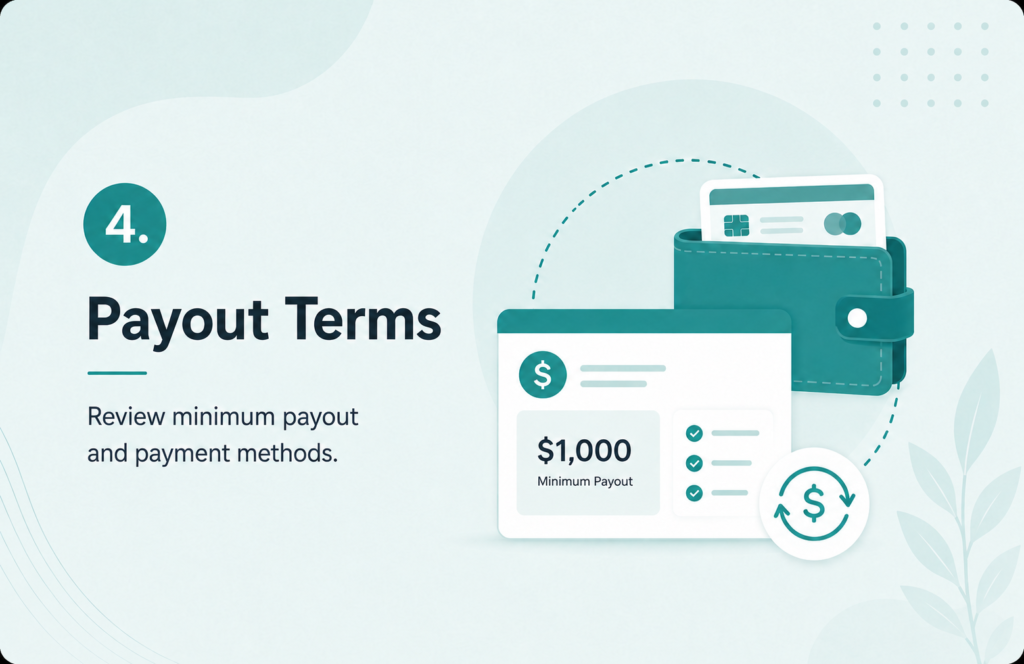
- What is the minimum payout?
- How often are payments made?
- Which payment methods are available?
- Is there a refund or approval period?
- Are payout rules clearly explained?
Brand Trust
- Is the company reasonably reputable?
- Are customer reviews mostly fair or at least understandable?
- Is pricing transparent?
- Is support easy to find?
- Does the brand avoid unrealistic claims?
Affiliate Terms
- Are allowed traffic sources clear?
- Are paid ads allowed or restricted?
- Are email promotions allowed?
- Are coupon rules explained?
- Are disclosure rules mentioned?
Red Flags
- Are there pressure tactics?
- Are income claims realistic?
- Are there hidden fees?
- Is the product value clear?
- Would you feel comfortable recommending it?
If you still feel unsure after reviewing these points, wait.
There is no need to rush into a program that does not feel clear.
Use this checklist before joining an affiliate program. It will help you compare product fit, commission, cookie duration, payout terms, trust, and red flags in one place.
The example below shows how to compare affiliate programs without choosing only by commission rate.
Affiliate Program Comparison Checklist
Use this quick checklist before joining an affiliate program. The goal is not to find a perfect program, but to avoid unclear offers and choose programs that fit your audience and content.
| What to Compare | Why It Matters | Beginner-Safe Sign | Red Flag |
|---|---|---|---|
| Product Relevance | The product should match your niche and solve a real problem for your audience. | The product fits your content and is easy to explain. | The product feels random, forced, or unrelated to your readers. |
| Commission Rate | Higher commission can look attractive, but it does not always mean better quality or trust. | The payout is realistic, clear, and connected to a useful product. | Very high commission with vague promises or aggressive claims. |
| Cookie Duration | Cookie duration affects how long clicks may be tracked after someone uses your link. | The tracking window is clearly explained in the program terms. | Tracking rules are hidden, confusing, or hard to verify. |
| Payout Terms | Beginners need to know when and how commissions are approved and paid. | Minimum payout, payment schedule, methods, and refund rules are clear. | No clear payment information or unclear commission reversal rules. |
| Brand Trust | Your recommendation affects your credibility, so the company behind the product matters. | The brand has transparent pricing, support, and reasonable customer feedback. | Poor reviews, hidden fees, unrealistic claims, or difficult support. |
| Affiliate Rules | Programs may restrict paid ads, email promotion, coupon content, brand bidding, or traffic sources. | The affiliate terms are easy to find and understand. | Rules are vague, missing, or only visible after joining. |
| Red Flags | Warning signs help you avoid programs that may harm trust or create problems later. | The program uses realistic language and explains the offer clearly. | Guaranteed income, pressure tactics, hidden fees, or “secret system” promises. |
Loyalix note: Use this table as a beginner-friendly filter before joining or recommending any affiliate program. A lower commission from a trustworthy, relevant product can be safer than a high payout from an unclear offer.
Example: Comparing Two Well-Known Affiliate Programs
This example shows how beginners can compare affiliate programs without focusing only on commission.
Shopify vs Hostinger: Affiliate Program Overview
This educational example shows how beginners can compare affiliate programs by product fit, commission, referral window, payout timing, terms clarity, and trust.
Important note: Affiliate program terms can change. Always verify commission rates, referral windows, payout timing, restrictions, and disclosure requirements on the official affiliate page or inside the affiliate dashboard before publishing a recommendation.
This example shows why affiliate program comparison should not be based only on commission.
Shopify may be a better fit for ecommerce content, while Hostinger may be a better fit for website-building,
WordPress, and hosting-related content. The safer choice depends on your audience, niche, and the type of content you plan to create.
How Many Affiliate Programs Should Beginners Join?
Beginners do not need to join many affiliate programs at once.
In fact, too many programs can quickly create confusion.
You may end up with:
- too many links,
- too many dashboards,
- too many terms to track,
- too many products to understand,
- weaker recommendations,
- and less focused content.
A better beginner approach is to start with one to three relevant programs.
Choose programs that fit your niche and content plan. Then take time to understand the products, learn the rules, and create genuinely helpful content.
You can always add more later when your site is stronger and your audience is clearer.
A simple starting structure could be:
- one main program connected to your niche,
- one supporting tool or resource,
- and one educational or beginner-friendly product, if it makes sense.
This keeps your content focused and easier to manage.
Remember: affiliate marketing is not about joining as many programs as possible.
It is about making useful recommendations in the right context.
Where Affiliate Program Comparisons Fit in Your Content Plan
Affiliate program comparison content usually works best after your core educational content.
Before readers compare programs, they often need to understand:
- what affiliate marketing is,
- how to start affiliate marketing with no experience,
- how to choose a niche,
- and how to create your first affiliate marketing content plan.
That is exactly why a content plan matters.
If a site begins only with comparisons and promotions, it can feel too sales-focused.
But when a site first teaches, explains, and protects the reader, comparison content becomes much more useful.
A strong path may look like this:
First, explain the basics.
Then, help the reader choose a niche.
Next, show common mistakes and red flags.
After that, explain how to choose and compare affiliate programs.
That creates a trust-first journey and makes affiliate recommendations feel more natural.
Final Thoughts
Comparing affiliate programs before you join is one of the smartest things a beginner can do.
It helps you avoid weak offers, unclear terms, and programs that do not fit your audience.
Do not compare programs only by commission rate.
Compare:
- product relevance,
- brand trust,
- cookie duration,
- payout terms,
- affiliate rules,
- product experience,
- red flags,
- and audience fit.
A beginner-safe affiliate program should be clear, useful, realistic, and easy to explain.
If a program feels confusing, rushed, or too good to be true, take more time.
Good affiliate marketing is built on trust.
The best programs are not always the loudest or the highest-paying. They are the ones you can recommend honestly, explain clearly, and connect to your audience’s real needs.
Start slowly.
Compare carefully.
Choose programs that support your long-term credibility.
That is a much stronger path than chasing quick commissions.
When you compare affiliate programs carefully, you protect your audience’s trust and build a stronger long-term foundation.
FAQ
What should I compare before joining an affiliate program?
Compare product relevance, commission rate, cookie duration, payout terms, affiliate rules, brand reputation, product experience, and red flags. A beginner-safe program should be clear, useful, and relevant to your audience.
Is a higher commission always better?
No. A higher commission does not always mean a better program. A lower commission from a trusted product can be better than a high payout from a confusing or risky offer.
What is cookie duration in affiliate marketing?
Cookie duration is the time window during which a customer’s action may be tracked after clicking your affiliate link. A longer cookie can help, but it should be considered together with product fit, trust, and conversion quality.
What payout terms should beginners check?
Beginners should check the minimum payout, payment schedule, payment methods, refund periods, approval rules, and whether commissions can be reversed. Clear payout terms make a program easier to trust.
How do I know if an affiliate program is trustworthy?
Look for clear terms, realistic claims, transparent pricing, customer reviews, accessible support, and a product that solves a real problem. Be careful with programs that use pressure tactics or guaranteed income claims.
Can beginners join more than one affiliate program?
Yes, but beginners should start small. One to three relevant programs is usually enough at the beginning. Joining too many programs can make your content unfocused and harder to manage.
What are red flags in affiliate programs?
Red flags include unrealistic income promises, hidden fees, unclear terms, poor customer reviews, pressure to join quickly, confusing payout rules, and products that are hard to understand or explain honestly.


