
How to Choose Your First Affiliate Program Safely
Choosing the first affiliate program seems like a daunting task. There are thousands of programs out there, not to mention the numerous “gurus” that are screaming about making “easy money.”
The thing is, your first choice is important, since it determines your own confidence and, even more importantly, your audience’s trust. In this article, we’ll tell you how to make such a choice wisely, no matter whether you are an absolute beginner.
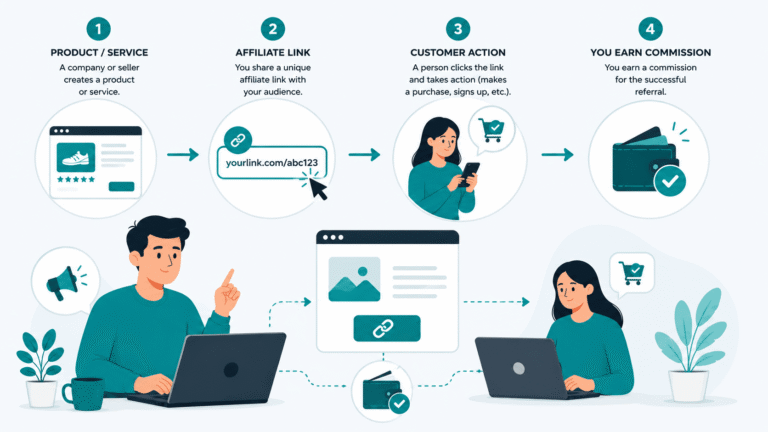
If you still need to learn the basics first, start with our guide on what affiliate marketing is and how it really works.
Learning how to select the first affiliate program will save you from numerous offers and help build trust with your audience at the very beginning.
If you still need to learn the basics first, start with our guide on what affiliate marketing is and how it really works.
Choose your first affiliate program safely by comparing offers
Choosing your initial affiliate program securely begins with asking straightforward questions. Before enrolling in any program, verify that the product is pertinent, the company is credible, and the conditions are sufficiently plain for a novice to comprehend.
Start With Your Audience, Not the Offer
Many beginners err by prioritizing the commission. However, if a product does not align with your audience, it will be more challenging to endorse honestly, and it may erode trust over time.
Pose these three queries to yourself before enrolling in any program:
- To whom am I assisting? (e.g., novices, busy professionals, or scholars).
- What is their most significant “point of difficulty”? (e.g., apprehension of scams, inadequate savings, or uncertainty regarding where to commence).
- Which remedy would genuinely simplify their existence at this moment?
The Objective: Cease pursuing arbitrary offers. Begin connecting individuals with solutions they genuinely require.
Five Safety Criteria for Beginners
Many novices select their initial affiliate program with undue haste. They observe a substantial commission, an elegantly designed landing page, or a well-known brand name and presume it must be the appropriate choice.
Yet, a superior initial selection is typically one that is lucid, dependable, and genuinely beneficial for your audience. An effective affiliate program should correspond to your subject, resolve a tangible issue, and be simple to elucidate in your content.
Once you discover a product that fits your niche, assess it using these benchmarks to safeguard your time and reputation.
Product Quality & Value
Would you feel at ease recommending this to a close acquaintance? If feasible, personally evaluate the product. If you cannot articulate it simply, refrain from promoting it.
Commission & Payout Structure
Look beyond the percentage. Examine the minimum payout threshold, the frequency of program payments, and whether the commission structure is logical for your audience.
Cookie Duration
This denotes the time frame you have to earn a commission after an individual clicks your link. For novices, 30–60 days is often more practical.
Payment Terms and Rules
Verify the payout threshold, payment methods, payment timetable, and any crucial regulations before joining.
Should some program terms seem perplexing, our beginner’s glossary of affiliate marketing terms can assist you in grasping the fundamentals more clearly.
Brand Reputation
Opt for companies with responsive support, unambiguous contact information, and transparent communication. Steer clear of brands that depend on coercion or unrealistic promises.
Your Step-by-Step Action Plan
To circumvent feeling overwhelmed, adhere to a calm and pragmatic procedure. There is no need to enroll in numerous programs simultaneously. A superior beginning is typically simpler and more focused.
- Select one audience and one distinct problem to concentrate on.
- Curate a shortlist of three to five products that genuinely resolve that problem.
- Diligently compare the terms, including commissions, cookie duration, payout methods, and regulations.
- Peruse the promotional directives to ensure your content methodology is permissible.
- nitiate with one program, learn its operation, and cultivate confidence before expanding.
- You can also read about the affiliate marketing oversights novices should avoid to make more informed decisions from the outset.
Red Flags: What to Avoid
It is wise to be wary if a particular plan exhibits any of these red flags. While a substantial commission might appear alluring, trustworthiness and openness prove to be more valuable in the long term.
Beginners should also review basic scam-prevention guidance before joining any online program.
- Guaranteed income claims
- Pressure tactics
- Hidden rules or unclear terms
- No real company details or support
- A product that feels misleading or too good to be true
If something feels manipulative or unclear, it is usually better to step back and choose a more trustworthy option.
You can also read about the affiliate marketing mistakes beginners should avoid to make better decisions from the start.
If you want to go deeper before joining any program, you can also read our guide on how to compare affiliate programs before you join.
Final Thoughts: Build Slowly, Promote Honestly
Launching your inaugural affiliate initiative doesn’t demand perfection, yet it must be authentic, pertinent, and genuinely helpful. Frequently, the most enduring and impactful results emerge from assisting individuals in making more informed choices, rather than prioritizing the pursuit of the largest commissions.
Progress at a measured pace. Exercise discernment in your selections. Champion products or services that you genuinely believe in. This is the path through which affiliate marketing matures into a more enduring and reputable endeavor over time.
Gaining insight into the common errors new affiliate marketers make has the potential to prevent wasted effort, financial loss, and avoidable discouragement.
For those seeking a more tranquil entry point, our “Start Here” page offers approachable advice and subsequent actions specifically designed for novices.
When selecting your initial affiliate program with security in mind, prioritize reliability, pertinence, and transparent conditions rather than solely pursuing lucrative commission rates.
FAQ
How do I choose my first affiliate program?
Start by choosing a program that matches your audience, solves a real problem, and comes from a trustworthy company with clear rules and payment terms.
What should beginners check before joining an affiliate program?
Beginners should check product quality, company reputation, commission structure, cookie duration, payment methods, payout thresholds, and promotion rules.
Should I choose the affiliate program with the highest commission?
Not necessarily. A high commission does not always mean the product is useful, trustworthy, or a good fit for your audience.
Is it better to promote products I have used myself?
Yes, whenever possible. Personal experience makes your recommendations more natural, specific, and trustworthy.
How many affiliate programs should a beginner join?
It is usually better to begin with one or two strong programs instead of joining many at once.
What are red flags in an affiliate program?
Red flags include unrealistic promises, vague program terms, poor website quality, hidden conditions, weak support, and low-value products.