

How to Track Your Spending for Beginners
Tracking your spending is one of the simplest ways to understand your money better.
Many beginners feel unsure about budgeting because they do not know exactly where their money goes. Some expenses are easy to remember, such as rent, bills, or subscriptions. Others are smaller and happen throughout the day — coffee, snacks, delivery fees, transport, small online orders, or quick purchases.
These small expenses may not seem important at first. But over time, they can shape your monthly budget more than you expect.
Tracking your spending does not mean judging yourself or controlling every detail of your life. It simply means paying attention. When you know what you spend, you can make calmer decisions, notice patterns, and build better money habits step by step.
This guide explains a simple and realistic way for beginners to track their spending.
What Does It Mean to Track Your Spending?
Tracking your spending means writing down or recording where your money goes.
This can include everything you pay for during the day, week, or month. You can track your spending with a notebook, a spreadsheet, a budgeting app, or even a simple note on your phone.
The method is less important than the habit.
The goal is to understand your real spending behavior. Instead of guessing where your money went, you can look at your records and see a clearer picture.
For example, you may notice that your biggest spending categories are groceries, transport, subscriptions, coffee, or eating out. You may also see small purchases that happen often and quietly add up.
Tracking spending helps you move from uncertainty to awareness.
Why Tracking Your Spending Matters
Tracking your spending matters because it gives you clarity.
Without tracking, it is easy to underestimate everyday expenses. A few small purchases may not feel serious in the moment, but repeated spending can affect your budget over time.
When you track your spending, you can see:
- how much money you spend each week;
- which categories take the most space in your budget;
- which expenses are necessary;
- which expenses are flexible;
- where small changes may help.
This is especially useful for beginners because it makes budgeting less confusing.
Before you can improve your budget, you need to understand your current habits. Tracking your spending gives you that starting point.
You do not need to track perfectly forever. Even tracking for two to four weeks can help you see patterns that were not obvious before.
What Should Beginners Track First?
Beginners do not need to create a complicated system. It is better to start with a few simple categories.
You can begin by tracking:
- fixed expenses;
- variable expenses;
- small everyday purchases;
- subscriptions;
- cash spending;
- card payments;
- online orders;
- unexpected costs.
If you have already read about fixed and variable expenses, this step will feel easier. Fixed expenses are usually predictable, while variable expenses can change from month to month.
Tracking both types of expenses helps you understand your full money picture.
Start with what is easy to see. Then slowly add more detail if needed.
Simple Spending Categories for Beginners
Using categories makes spending easier to understand.
A simple budget usually starts with listing your bills and other expenses, including regular bills and everyday spending categories such as food, transport, clothing, and entertainment.
You do not need too many categories at the beginning. Too much detail can make the process feel stressful. A simple structure is usually better.
| Spending Category | What It Includes | Example |
|---|---|---|
| Housing | Rent, mortgage, basic home costs, or regular housing-related payments. | Rent payment |
| Bills | Electricity, phone, internet, insurance, and other regular bills. | Internet bill |
| Food | Groceries, basic meals, household food items, and everyday food spending. | Weekly groceries |
| Transport | Fuel, public transport, parking, ride services, or travel-related daily costs. | Bus ticket |
| Personal Spending | Coffee, clothes, personal care, small purchases, or flexible everyday spending. | Coffee shop |
| Subscriptions | Streaming services, apps, memberships, tools, or automatic monthly payments. | Monthly app payment |
| Savings | Money set aside for future needs, goals, or financial safety. | Emergency fund |
| Unexpected Costs | Expenses you did not plan for but still need to handle. | Repair or urgent purchase |
These categories are only a starting point. You can adjust them to fit your real life.
The goal is not to make the perfect table. The goal is to make your spending easier to see.
How to Track Your Spending Step by Step
Tracking your spending becomes easier when you keep the process simple.
Here is a beginner-friendly way to start.
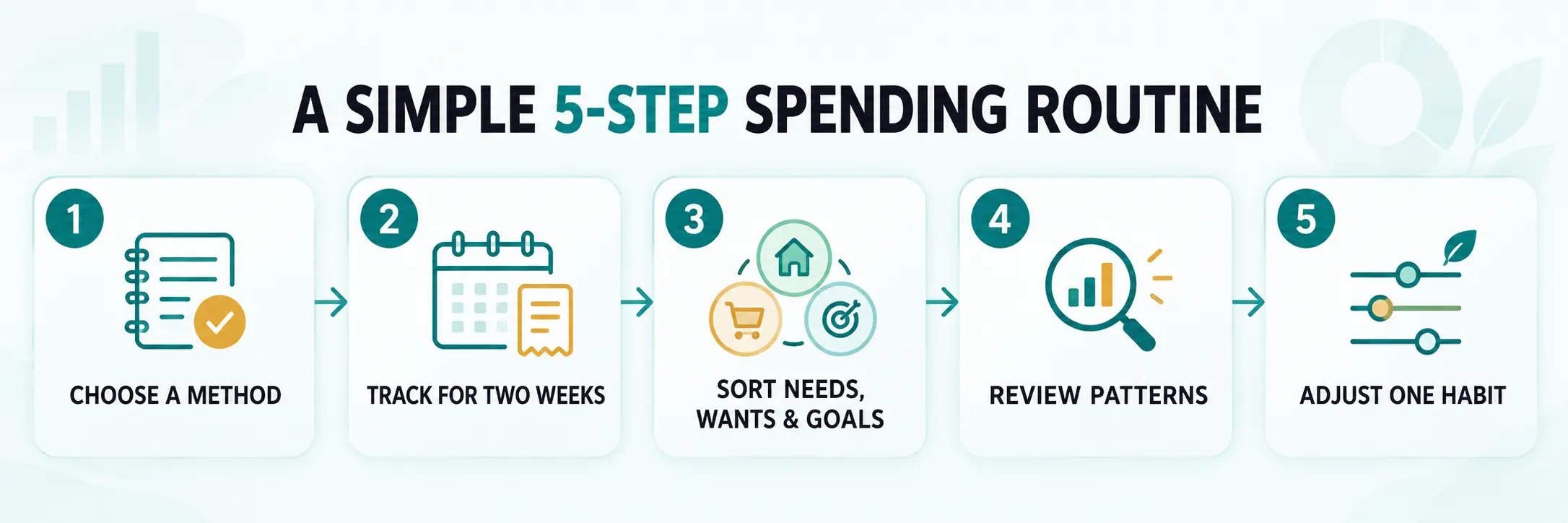
Step 1: Choose One Tracking Method
If you use a spending app, review its privacy settings and permissions before connecting a bank account. A simple note, spreadsheet, or manual tracker may be enough if you prefer not to share financial information with another service.
Choose one method that feels easy enough to repeat.
You can use:
- a notebook;
- a phone note;
- a spreadsheet;
- a budgeting app;
- a printed spending tracker;
- your bank statement.
Do not choose a system that feels too complicated. A simple method that you actually use is better than a perfect method you avoid.
If you enjoy writing things down, use a notebook. If you prefer digital tools, use your phone or a spreadsheet.
The best tracking method is the one you can use consistently.
Step 2: Track Every Expense for Two Weeks
The Consumer Financial Protection Bureau also provides a free spending tracker that can help you record expenses, organize them by category, and review your spending before creating or adjusting a budget.
Start by tracking your spending for two weeks.
Write down each purchase as soon as possible. Include the date, amount, category, and a short note if needed.
For example:
| Date | Category | Expense | Amount |
|---|---|---|---|
| July 8 | Food | Groceries | $45.20 |
| July 8 | Transport | Bus ticket | $12.40 |
| July 9 | Personal Spending | Coffee | $4.50 |
| July 9 | Bills | Electricity bill | $68.90 |
Two weeks is a good starting point because it feels realistic. It is long enough to notice patterns, but not so long that it feels overwhelming.
After two weeks, you can decide whether to continue for a full month.
Step 3: Separate Needs, Wants, and Goals
Once you have your spending records, look at each expense and ask a simple question:
Was this a need, a want, or a goal?
Needs are important expenses that support your basic life. Wants are flexible expenses that make life more enjoyable. Goals are things you are building toward, such as savings, debt repayment, education, or an emergency fund.
This does not mean wants are bad. Wants are part of normal life. But separating needs, wants, and goals can help you understand your choices more clearly.
This step connects tracking your spending with better financial awareness.
Step 4: Review Your Spending Patterns
After tracking your spending for a while, review your notes.
Look for patterns such as:
- categories that are higher than expected;
- small purchases that happen often;
- subscriptions you forgot about;
- spending that happens when you are tired or rushed;
- categories that feel important but need limits.
This review is not about blame. It is about information.
You may discover that your groceries are normal, but delivery orders are higher than expected. You may notice that several small subscriptions are costing more than you realized.
Step 5: Adjust One Habit at a Time
Beginners often try to change too much at once. This can make budgeting feel stressful.
A better approach is to choose one small habit to improve.
For example, you could:
- reduce one subscription;
- set a weekly limit for delivery orders;
- plan groceries before shopping;
- track coffee spending for one month;
- review online purchases before buying;
- set aside a small amount for savings.
Small changes are easier to repeat. And repeated small changes can create better financial habits over time.
A Simple Weekly Spending Review
Compare your tracker with your bank, card, and cash records. This can help you find forgotten subscriptions, fees, or small purchases that were not recorded during the week.
A weekly review can help you stay aware without feeling overwhelmed.
Once a week, take 10–15 minutes and ask:
- How much did I spend this week?
- Which category was the highest?
- Did I spend more than expected?
- Were there any unnecessary expenses?
- What small change can I make next week?
You can write your answers in a notebook or spreadsheet.
This weekly habit helps you stay connected to your money. It also makes monthly budgeting easier because you are not trying to remember everything at the end of the month.
Common Spending Tracking Mistakes Beginners Make
Tracking spending is simple, but beginners can still make a few common mistakes.
The good news is that these mistakes are easy to fix. The goal is not to track perfectly. The goal is to create a simple habit that helps you understand your money better.
Trying to Track Too Many Details
Some beginners create too many categories at the start.
This can make the process feel heavy and confusing. If every small purchase needs a detailed label, you may stop tracking completely.
Start with simple categories first. You can always add more detail later.
Forgetting Small Purchases
Small purchases are easy to ignore.
Coffee, snacks, app payments, delivery fees, and small online orders may not seem important one by one. But they can add up over time.
Tracking small purchases helps you see your real spending patterns.
Only Tracking Big Bills
Big bills matter, but they are not the whole budget.
Rent, insurance, and phone bills are usually easy to remember. Variable expenses are often harder to notice because they happen throughout the month.
A useful spending tracker includes both big expenses and small everyday spending.
Judging Yourself Too Harshly
Tracking your spending should not make you feel guilty.
Everyone has habits they can improve. The purpose of tracking is not to criticize yourself. The purpose is to understand your money and make better decisions step by step.
A calm approach is more sustainable than a strict one.
How Tracking Spending Supports Financial Literacy
Tracking your spending is an important part of financial literacy.
Financial literacy is not only about learning definitions. It is about understanding how money works in your real life.
When you track your spending, you begin to see the connection between income, expenses, habits, needs, wants, and goals.
This can help you:
- build a simple budget;
- understand fixed and variable expenses;
- prepare for unexpected costs and start building an emergency fund;
- make smarter spending choices;
- start saving more intentionally;
- feel more confident with money decisions.
Tracking spending is a practical habit. It turns financial literacy into something you can actually use.
Final Thoughts
Tracking your spending does not need to be complicated.
You do not need a perfect system, a complicated spreadsheet, or an expensive app. You only need a simple way to see where your money goes.
Start small. Track your spending for two weeks. Use simple categories. Review your patterns once a week. Then choose one small habit to improve.
Over time, this simple practice can help you understand your money better, make calmer decisions, and build stronger financial habits.
The goal is not to control every detail. The goal is to create more clarity.
When you understand your spending, you can make choices that support your needs, your goals, and your future.