

How to Improve Affiliate Conversions Without Being Pushy
Improving affiliate conversions does not require aggressive selling, exaggerated promises, or constant pressure.
In many cases, readers are more likely to take action when they feel informed, respected, and free to make their own decision. Clear explanations, relevant recommendations, honest comparisons, and realistic expectations can support conversions more effectively than urgency or persuasive language that makes people uncomfortable.
For beginners, it is important to understand that an affiliate conversion is not created by a button alone.
A reader usually moves through several stages before clicking an affiliate link or completing a purchase. They may first discover an article through search, compare different options, check the price, review the limitations, and decide whether the product fits their needs.
Your content supports that process.
When the recommendation is relevant and the information is useful, the reader has a stronger reason to continue. When the content feels one-sided, unclear, or overly promotional, trust can quickly disappear.
The goal is not to convince every visitor to buy.
The goal is to help the right reader understand:
- what the product does;
- who it may be suitable for;
- what problem it can help solve;
- what limitations it has;
- what alternatives may exist;
- what the next step involves.
This approach creates a healthier relationship between content, audience trust, and affiliate performance.
In this guide, you will learn how to improve affiliate conversions through relevance, clarity, transparent comparisons, useful calls to action, and ethical content—without becoming pushy.
What Affiliate Conversions Really Mean
An affiliate conversion happens when a reader completes the action connected to an affiliate offer.
Depending on the program, that action may include:
- purchasing a product;
- starting a free trial;
- creating an account;
- subscribing to a service;
- requesting information;
- downloading an application;
- completing another qualified action.
A click is not always a conversion.
A reader may click an affiliate link to learn more and then decide not to continue. They may also return later, compare other products, or complete the purchase on another device.
This means conversion performance is influenced by more than the final button on your page.
It can depend on:
- the relevance of the product;
- the reader’s level of awareness;
- the quality of your explanation;
- the clarity of the offer;
- pricing and product conditions;
- trust in your content;
- the merchant’s landing page;
- tracking and cookie rules.
Understanding these factors helps you focus on what you can realistically improve.
For a broader explanation of this process, see how affiliate marketing works in practice.
A Conversion Is Not Always a Sale
Many beginners associate conversions only with purchases.
However, affiliate programs can use different conversion models. Some programs pay for completed sales, while others may reward leads, trial registrations, app installations, or other defined actions.
Before promoting an offer, review the program terms carefully.
You should understand:
- which action counts as a conversion;
- when the conversion is approved;
- whether cancellations or refunds affect commission;
- how long the tracking cookie lasts;
- which traffic sources are allowed;
- whether there are geographic restrictions.
This information helps you create content that accurately reflects the offer.
Higher Traffic Does Not Automatically Mean Higher Conversions
More visitors can create more opportunities, but traffic alone does not guarantee results.
A smaller group of readers with a clear need may convert better than a large audience that is only loosely interested in the topic.
For example, an article that answers a specific product-comparison question may attract fewer visitors than a general beginner guide. However, those readers may be closer to making a decision.
This is why search intent and audience relevance are so important.
The strongest affiliate content does not simply attract attention. It connects the right reader with information that supports a real decision.
Conversion Rate Is Only One Part of the Picture
Conversion rate shows the percentage of visitors or clicks that complete a desired action.
A simplified formula is:
Conversion Rate = Total Attributed Conversions ÷ Total Number of Clicks or Visits × 100
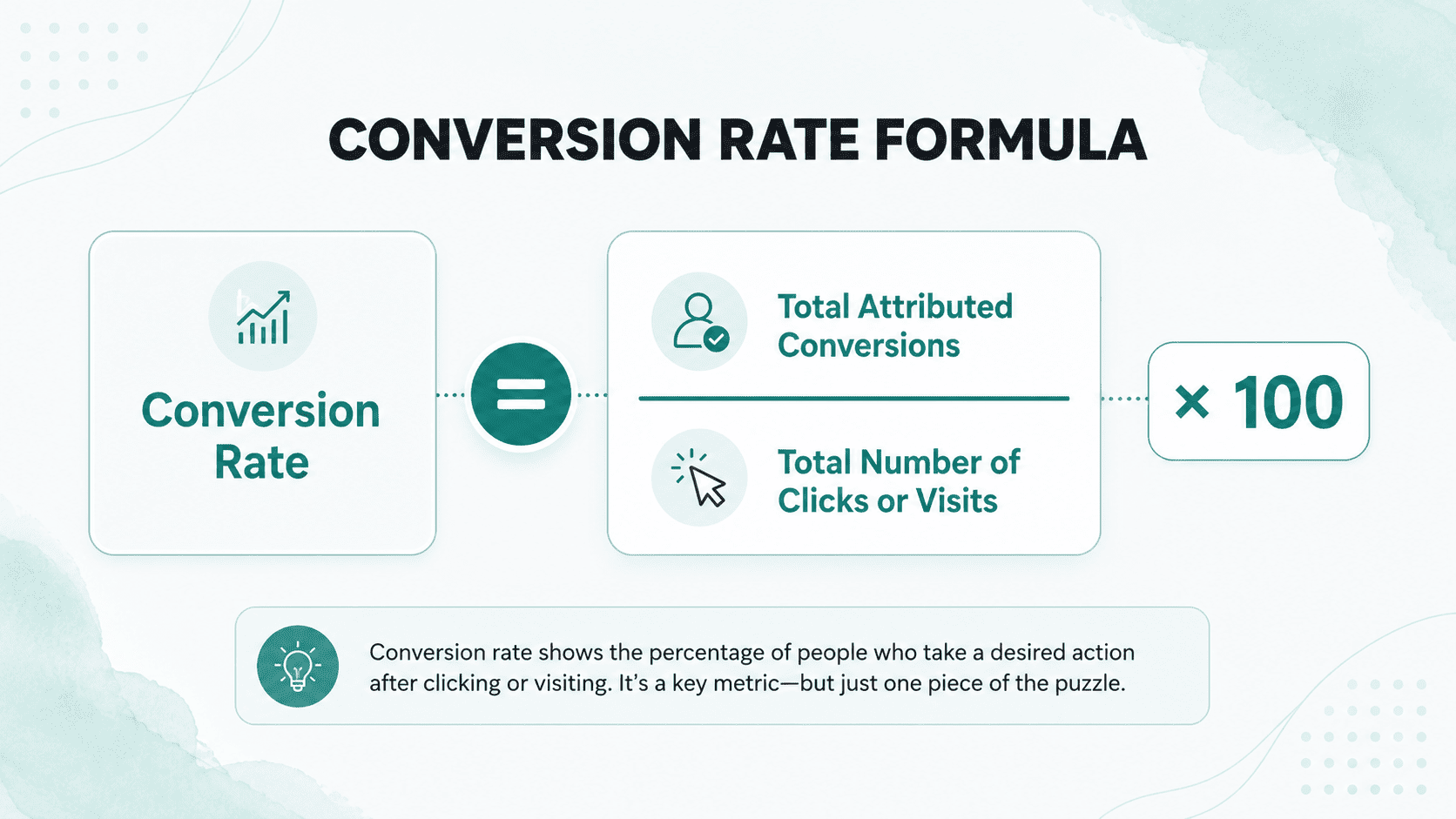
For example, if 100 readers click an affiliate link and three complete the required action, the conversion rate is 3%.
This number can be useful, but it should not be viewed in isolation.
A higher conversion rate does not always mean the content is better. Results may also be affected by:
- product price;
- audience location;
- seasonality;
- merchant reputation;
- landing-page quality;
- discounts or promotions;
- attribution rules;
- tracking accuracy.
Use conversion data as a signal, not as the only measure of content quality.
Why Pushy Affiliate Content Often Performs Worse
Affiliate content becomes pushy when it focuses more on forcing a quick decision than helping the reader understand whether an offer is right for them.
This may include exaggerated promises, repeated calls to buy, artificial urgency, hidden limitations, or language designed to make readers feel that they will lose an important opportunity if they do not act immediately.
These techniques may attract attention, but they can also weaken trust.
Readers are increasingly careful about promotional content. Many people compare several sources before making a purchase, especially when a product is expensive, unfamiliar, or connected to financial results.
When an article feels overly promotional, readers may question whether the recommendation is based on genuine value or only on the possibility of earning a commission.
Pressure Can Create Resistance
Most readers want to feel that they are making their own decision.
Repeated instructions such as “buy now,” “do not miss this,” or “you need this product” can create discomfort, particularly when the content has not yet explained the product clearly.
Instead of increasing confidence, pressure can make readers:
- leave the page;
- question the recommendation;
- search for a more balanced review;
- delay the decision;
- avoid the affiliate link entirely.
A useful affiliate article should reduce uncertainty, not increase emotional pressure.
Artificial Urgency Can Damage Trust
Urgency may be appropriate when a real offer has a verified expiration date or limited availability.
However, creating urgency without evidence can be misleading.
Examples include:
- claiming that an offer will disappear without confirming the deadline;
- suggesting that only a few places remain when availability is unknown;
- presenting an ordinary price as a rare opportunity;
- repeatedly warning readers that they will fall behind if they wait.
If an offer genuinely ends on a specific date, explain that condition clearly and accurately.
If no real deadline exists, allow the reader to evaluate the product at a comfortable pace.
Exaggerated Promises Attract the Wrong Expectations
Statements that promise guaranteed income, effortless success, immediate results, or universal benefits may increase curiosity, but they also create unrealistic expectations.
Affiliate products rarely work equally well for every person.
Results may depend on:
- experience;
- available time;
- budget;
- consistency;
- audience;
- market conditions;
- product use;
- personal goals.
Responsible affiliate content explains possibilities without presenting uncertain outcomes as guarantees.
This is especially important when writing about business tools, financial products, online income, or educational programs.
One-Sided Reviews Feel Less Credible
A review that includes only benefits may sound more like an advertisement than an independent explanation.
Every product has limitations, trade-offs, or situations where it may not be the best option.
Readers often trust a recommendation more when the content explains:
- who may benefit from the product;
- who may not need it;
- what it does well;
- where it may be limited;
- what additional costs may exist;
- what alternatives are available.
Acknowledging limitations does not automatically reduce conversions.
It can help unsuitable readers avoid the offer while giving suitable readers more confidence in the recommendation.
Too Many Calls to Action Can Distract the Reader
A call to action should help the reader understand the next step.
When every paragraph contains a button, banner, or affiliate link, the article may feel difficult to read.
Too many CTAs can also make it unclear which action matters most.
A more balanced approach is to place affiliate links where they naturally support the reader’s decision, such as:
- after explaining the product;
- after a feature comparison;
- near pricing information;
- after discussing benefits and limitations;
- at the end of a complete review.
The purpose of a CTA is not to interrupt the reader repeatedly.
It is to make the next step clear when the reader has enough information to consider it.
Start With Audience Relevance
One of the most effective ways to improve affiliate conversions is to recommend products that closely match the needs of your audience.
Even excellent copy cannot make an irrelevant product useful to the wrong reader.
Before creating affiliate content, consider:
- what problem the reader is trying to solve;
- what level of experience they have;
- what budget they may have;
- which features matter most to them;
- what concerns may prevent them from acting;
- what alternatives they are already considering.
Relevance creates the foundation for an ethical conversion.
When the product fits the reader’s situation, the content does not need to rely on pressure.
Choosing a clear niche can make it easier to understand the audience, search intent, and products that genuinely fit the topic.
Match the Offer to the Search Intent
Search intent describes what a person is trying to accomplish when they enter a query.
A reader searching for:
“What is email marketing?”
is likely looking for introductory information.
A reader searching for:
“best email marketing tool for a small business”
may be comparing solutions.
A reader searching for:
“MailerLite pricing and limitations”
may be closer to choosing a specific product.
These readers should not receive identical content or the same CTA.
Introductory content should focus on education. Comparison content should help readers evaluate options. Product-focused content should explain practical details, costs, limitations, and next steps.
Matching content to search intent makes the recommendation feel more useful and less promotional.
Recommend Products for a Clear Use Case
Broad statements such as “This is the best tool for everyone” are rarely helpful.
A stronger recommendation identifies a specific use case.
For example:
- suitable for beginners who need a simple interface;
- useful for small businesses with a limited email list;
- appropriate for creators who want basic automation;
- less suitable for advanced teams that need complex reporting;
- worth considering for users who value ease of use over extensive customization.
Specific recommendations help readers recognize whether the product fits their situation.
Do Not Promote Every Available Product
Joining many affiliate programs does not mean every product must appear in your content.
Promoting too many unrelated offers can weaken the identity of your website and confuse readers.
Choose products that:
- relate directly to your content topics;
- solve a clear audience problem;
- have understandable terms;
- come from a credible provider;
- can be explained honestly;
- fit the values of your brand.
For Loyalix, relevance and trust should remain more important than the number of affiliate links.
A beginner-safe process for choosing an affiliate program can help you narrow the options before creating promotional content.
Build Trust Before Asking for Action
Trust is one of the strongest foundations of effective affiliate content.
Readers are more likely to consider a recommendation when they understand why the product is being mentioned, how it may help, and what limitations they should know before making a decision.
Trust is not created by adding more persuasive language.
It is created through clarity, consistency, transparency, and useful information.
Before asking a reader to click an affiliate link, make sure the content has already answered the most important questions:
- Why is this product relevant?
- Who is it suitable for?
- What problem may it help solve?
- What does it cost?
- What limitations or conditions should the reader understand?
- Why are you recommending it?
When these questions are answered clearly, the CTA feels like a logical next step rather than a sales interruption.
Disclose Affiliate Relationships Clearly
Readers should know when a page contains affiliate links.
A clear affiliate disclosure helps explain that you may receive a commission if someone completes a qualifying action through your link.
The disclosure should be easy to find and written in language that ordinary readers can understand.
Avoid hiding important information inside a long legal page or using wording that is difficult to interpret.
A simple disclosure may explain:
This article may contain affiliate links. If you make a purchase through one of these links, Loyalix may earn a commission at no additional cost to you.
The disclosure should not replace honest content.
It should support transparency while the article itself remains balanced, useful, and reader-focused.
For official guidance on endorsements and material connections, review the FTC’s Endorsement Guides.
Explain Why You Recommend the Product
Do not assume that readers will understand why a product belongs in the article.
Explain the connection between the product and the reader’s problem.
For example, instead of writing:
This is a great tool. Try it today.
A more useful explanation would be:
This tool may be suitable for beginners who need a simple interface, basic automation, and a lower starting cost. It may be less suitable for larger teams that need advanced reporting or complex workflows.
This type of explanation gives the reader a reason to evaluate the offer.
It also makes the recommendation feel more specific and credible.
Support Claims With Clear Details
General claims such as “easy to use,” “best value,” or “perfect for beginners” are not very helpful without explanation.
Whenever possible, support a claim with practical details.
For example:
- describe which feature saves time;
- explain what the free plan includes;
- mention whether customer support is available;
- identify important pricing limits;
- explain which beginner tasks the product simplifies;
- clarify whether additional tools may still be required.
Specific information helps readers understand what a claim actually means.
It also reduces the risk of creating expectations that the product may not meet.
Include Limitations and Trade-Offs
Readers do not expect every product to be perfect.
In fact, a recommendation may feel more trustworthy when it includes relevant limitations.
You may need to explain:
- features that are missing;
- costs that increase with usage;
- restrictions on the free version;
- learning requirements;
- contract or cancellation conditions;
- situations where another product may be more suitable.
The goal is not to create unnecessary negativity.
The goal is to help readers understand what they are choosing.
A limitation that is important for one person may not matter to another. By explaining trade-offs, you allow the reader to make a decision based on their own priorities.
Trust grows when readers can see both the value and the limitations of an offer.
Separate Personal Experience From General Information
If you have personally used a product, explain which parts of the recommendation are based on your own experience.
If you have not used it directly, avoid writing as if you have.
You can still create useful affiliate content by reviewing:
- official product information;
- pricing pages;
- feature documentation;
- program terms;
- available demonstrations;
- customer support information;
- clearly identified third-party evidence.
The important point is to distinguish between:
- what you personally experienced;
- what the company officially states;
- what you are reasonably concluding from available information.
This protects the credibility of your content.
Keep Recommendations Consistent With Your Brand
Readers gradually learn what your website stands for.
If Loyalix promotes careful decisions, financial awareness, and long-term thinking, affiliate recommendations should reflect the same values.
Avoid recommending a product only because the commission is attractive.
A strong affiliate offer should also be:
- relevant to the audience;
- understandable for beginners;
- reasonably transparent;
- connected to a real problem;
- suitable for the educational purpose of the article.
Consistency helps readers understand that affiliate links are part of the content strategy—not the only reason the content exists.
A clear affiliate marketing content plan can help keep recommendations aligned with the website’s purpose and audience.
Build Confidence Before Showing the CTA
A CTA works best after the reader has enough information to evaluate the next step.
Before placing an affiliate button or link, confirm that the nearby content explains:
- the product’s purpose;
- the most relevant benefits;
- important limitations;
- who may find it useful;
- what happens after clicking.
The CTA can then remain simple.
Examples include:
View Current Pricing
Review the Product Details
Compare Available Plans
Start a Free Trial
Visit the Official Website
A clear CTA does not need exaggerated language.
Its purpose is to make the next step visible after the reader has had a fair opportunity to understand the offer.
Make Product Information Easy to Evaluate
Readers are more likely to consider an affiliate offer when the important information is easy to find, understand, and compare.
A long article does not automatically create clarity.
If pricing, limitations, eligibility requirements, or important conditions are hidden inside large paragraphs, readers may leave the page before they feel confident enough to take the next step.
Good affiliate content organizes information around the questions a reader is already asking:
- What does the product do?
- Who is it designed for?
- How much does it cost?
- What is included?
- What are the main limitations?
- Are there additional expenses?
- How does it compare with other options?
- What happens after clicking the affiliate link?
Clear organization can improve affiliate conversions because it reduces unnecessary uncertainty without pressuring the reader.
Place the Most Important Facts Near the Top
Readers should not need to search through the entire article to understand the basic offer.
Near the beginning of a product review or comparison, consider explaining:
- the product category;
- the main use case;
- the intended user;
- the starting price;
- whether a free plan or trial exists;
- the most important limitation;
- the type of person who may benefit from it.
This does not mean that every detail must appear in the introduction.
It means that readers should receive enough context to decide whether the rest of the article is relevant to them.
For example:
This email marketing platform may be suitable for beginners and small businesses that need basic automation and a simple interface. A free plan may be available, but advanced reporting and larger subscriber limits may require a paid plan.
This short overview gives the reader a practical reason to continue.
Explain Pricing Beyond the Starting Number
A low starting price may look attractive, but it does not always represent the full cost of using a product.
Pricing may change based on:
- the number of users;
- the number of subscribers;
- storage or usage limits;
- transaction volume;
- premium features;
- billing frequency;
- taxes;
- add-ons;
- contract length.
When discussing pricing, clarify what the listed amount actually includes.
Instead of writing:
Plans start at $15 per month.
A more useful explanation may be:
Plans start at $15 per month for the entry-level option. The total cost may increase as the subscriber list grows or when advanced automation and reporting features are added.
This helps readers understand the difference between an advertised entry price and the possible long-term cost.
A starting price is useful only when readers also understand what is included and what may increase the final cost.
Distinguish Features From Benefits
A feature describes what a product includes.
A benefit explains how that feature may help a particular user.
For example:
| Feature | Possible Benefit |
|---|---|
| Automated email sequences | Reduces the need to send every message manually |
| Budget categories | Helps users understand where money is going |
| Comparison dashboard | Makes several options easier to review |
| Mobile application | Allows users to complete basic tasks away from a computer |
| Free trial | Gives readers time to evaluate the product before paying |
A feature should not automatically be presented as a benefit for every reader.
Advanced automation may be valuable for an experienced business, but unnecessary for a beginner who needs only basic tools.
Explain the connection between the feature and the reader’s likely use case.
Use Comparison Tables Carefully
Comparison tables can help readers evaluate several products quickly.
However, a table should compare meaningful differences rather than include as many features as possible.
Useful comparison criteria may include:
- starting price;
- free plan or trial;
- beginner suitability;
- key features;
- important limitations;
- customer support;
- cancellation terms;
- best-fit use case.
A simple comparison may look like this:
| Product | Best For | Starting Cost | Main Strength | Important Limitation |
|---|---|---|---|---|
| Product A | Beginners | Varies | Simple setup | Limited advanced features |
| Product B | Growing teams | Varies | Strong automation | Higher cost as usage grows |
| Product C | Budget-conscious users | Varies | Lower entry price | Fewer integrations |
Do not create a comparison only to make one product appear superior.
The purpose is to help readers understand the differences and choose according to their own priorities.
A balanced comparison may also improve affiliate conversions because readers can evaluate the options without searching for essential details across several pages.
You can also use a structured framework to compare affiliate programs before joining.
Separate Benefits, Limitations, and Best-Fit Users
Readers should not have to guess whether a product is appropriate for their needs.
A clear affiliate recommendation should separate the product’s potential benefits, important limitations, and best-fit users.
This structure helps readers evaluate the offer without assuming that the same product will be suitable for everyone.

Potential Benefits
Explain what the product may do well and why those strengths could matter to a particular user.
Potential benefits may include:
- a simple setup process;
- useful beginner guidance;
- flexible pricing options;
- time-saving automation;
- clear reporting;
- responsive customer support;
- integrations with commonly used tools.
Avoid describing every feature as a major advantage.
Focus on benefits that are relevant to the reader’s likely goals and level of experience.
Important Limitations
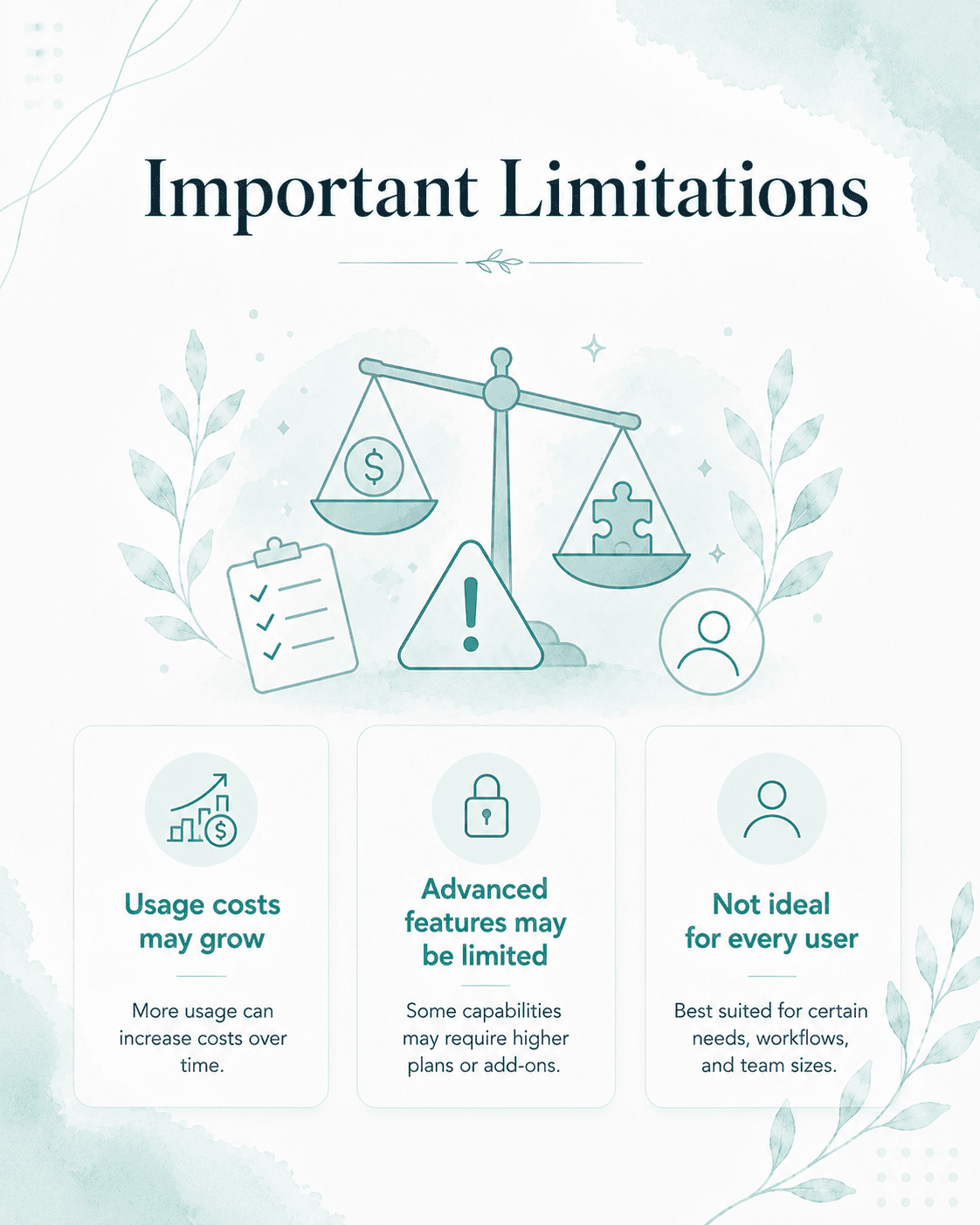
A balanced recommendation should also explain where the product may be less suitable.
Important limitations may include:
- limited customization;
- higher costs as usage grows;
- missing advanced features;
- geographic or eligibility restrictions;
- complex cancellation conditions;
- limited integrations;
- a learning curve for beginners.
Explaining limitations does not weaken the recommendation.
It helps readers decide whether the trade-offs are acceptable for their situation.

Best-Fit Users
Describe the type of person or business that may receive the most practical value from the product.
For example:
- beginners who want a simple starting point;
- small businesses with limited technical resources;
- creators who need basic automation;
- experienced teams that require advanced reporting;
- users who prioritize lower cost over extensive customization.
It can also be helpful to explain who may need a different option.
For example:
This product may work well for beginners who need simple tools, but it may not be suitable for larger teams that require advanced permissions, detailed reporting, or complex workflows.
Separating these three areas makes the recommendation easier to understand and more credible.
It also helps readers decide whether to continue evaluating the offer without feeling pressured toward a particular conclusion.
Keep Product Information Current
Affiliate content can become inaccurate when pricing, features, availability, or program terms change.
Outdated information may create confusion and reduce trust, even when the original recommendation was accurate at the time of publication.
Review important product details regularly, including:
- current pricing and billing options;
- available plans and included features;
- free-trial conditions;
- refund and cancellation policies;
- geographic availability;
- eligibility requirements;
- important usage limits;
- affiliate program terms.
Whenever possible, confirm these details on the product’s official website before updating the article.
Avoid presenting temporary discounts or promotional offers as permanent pricing.
When information may change, use careful wording such as:
Pricing and plan features may change. Review the official product page for the most current details before making a decision.
A visible Last Updated date can also help readers understand when the information was last reviewed.
However, the date should reflect a meaningful content check rather than a minor formatting change.
Keeping product information current supports transparency and helps readers make decisions based on relevant details.
An updated article should reflect current product details, not only a recently changed publication date.
Place Affiliate Links Near Relevant Information.
Affiliate links are most useful when they appear close to the information that helps readers evaluate the offer.
A link may be appropriate:
- after a clear product overview;
- near verified pricing information;
- after explaining an important feature;
- below a comparison table;
- after presenting both benefits and limitations;
- at the end of a complete review.
Avoid placing affiliate links inside unrelated sentences only to increase the number of clicks.
The link should support the reader’s next step rather than interrupt the flow of the article.
Use descriptive anchor text that explains where the link leads.
Clear examples include:
- review the current pricing;
- compare the available plans;
- visit the official product page;
- check the free-trial conditions;
- review the product details.
Generic phrases such as click here or learn more provide less context.
Readers should understand what they will see before opening the link.
It is also important to avoid placing several affiliate links too close together.
Too many links can make the content feel promotional and distract readers from the information they need to make a decision.
A smaller number of relevant, clearly placed links can create a more natural reading experience.
An affiliate link should appear where it supports a decision—not where it interrupts the reader.
Make the Page Easy to Scan on Mobile
Many readers will review affiliate content on a phone.
A page that looks clear on desktop may become difficult to use when tables, buttons, images, and long paragraphs are compressed onto a smaller screen.
Mobile readability depends on more than font size.
Readers should be able to understand the structure of the article, identify key details, and take the next step without unnecessary effort.
To improve mobile usability:
- keep paragraphs reasonably short;
- use clear H2 and H3 headings;
- avoid extremely wide tables;
- stack comparison cards vertically;
- make buttons large enough to tap;
- leave enough space between links;
- keep pricing and limitations visible;
- avoid placing several CTAs too close together;
- check that images do not push important text too far down the page.
Tables should be tested carefully on smaller screens.
A wide desktop table may be easier to read as separate mobile cards, with each product shown in its own vertical block.
Buttons should also be easy to identify and tap.
A clear CTA with enough spacing around it is usually more useful than several small buttons placed close together.
Images can improve the reading experience, but they should not dominate the mobile layout.
Use responsive image widths and check that the text remains easy to follow after each visual element.
It is also important to review the page on a real phone whenever possible.
The Elementor mobile preview is useful, but it may not show every spacing, loading, or touch-related issue exactly as a live device does.
A mobile-friendly page reduces friction and helps readers evaluate the offer more comfortably.
Mobile clarity helps readers understand the offer before they decide whether to click.
Write Calls to Action That Respect the Reader.
A call to action should help readers understand the next logical step.
It should not create pressure, exaggerate urgency, or suggest that every reader needs to act immediately.
In affiliate content, an effective CTA connects the information in the article with a relevant action, such as reviewing pricing, comparing plans, checking eligibility, or visiting the official product page.
A respectful CTA gives readers control over the decision.
It explains what will happen after the click and allows the reader to continue only when the offer appears relevant to their needs.
Use Clear and Specific CTA Language
A CTA should describe the destination or action clearly.
Specific wording helps readers understand what they will see after clicking.
Clear examples include:
- View Current Pricing
- Compare Available Plans
- Review the Product Details
- Check Eligibility Requirements
- Explore the Free Trial
- Visit the Official Website
These CTAs are more informative than generic phrases such as:
- Click Here
- Learn More
- Get It Now
- Do Not Miss Out
Generic or overly urgent language may attract clicks, but it does not necessarily create informed decisions.
The CTA should set an accurate expectation rather than simply encourage immediate action.
Match the CTA to the Reader’s Stage
Not every reader is ready to purchase or register.
The appropriate CTA depends on what the reader is trying to accomplish.
A beginner reading introductory content may need a low-pressure next step, such as:
- Learn How the Product Works
- Review the Main Features
- See Who the Product Is For
A reader comparing several options may be ready to:
- Compare Plans
- Review Pricing
- Check Product Limitations
A reader who has already evaluated the offer may be ready to:
- Start the Free Trial
- Create an Account
- Visit the Official Product Page
Matching the CTA to the reader’s stage makes the action feel more natural and relevant.
Place the CTA After Enough Information
A CTA is more useful after the reader has received enough information to evaluate the offer.
Before presenting a strong action, explain important details such as:
- the main use case;
- the intended user;
- pricing or cost structure;
- key benefits;
- important limitations;
- eligibility requirements;
- free-trial or cancellation conditions.
Placing a CTA before these details may make the content feel promotional.
A contextual CTA works better because it follows the information that supports the decision.
For example:
This plan may be suitable for beginners who need basic automation and a simple interface. However, advanced reporting may require a higher-priced plan.
A relevant CTA could then be:
Avoid Artificial Urgency
Urgency should only be used when it reflects a real and verifiable condition.
Avoid phrases such as:
- Act Now
- Limited Opportunity
- Last Chance
- Buy Before It Is Too Late
- Everyone Is Joining
These phrases can create unnecessary pressure, especially when no genuine deadline or availability limit exists.
When an offer has a real expiration date, explain it clearly and factually.
For example:
The promotional price is currently listed as available until September 30. Check the official product page to confirm the current terms.
Do not turn temporary promotions into exaggerated claims.
Readers should be able to evaluate the offer calmly.
Limit the Number of CTAs
Repeating the same CTA too often can make an article feel like an advertisement.
Several buttons placed close together may also distract readers from the information they are trying to understand.
A smaller number of well-placed CTAs is usually more effective.
Consider placing a CTA:
- after a complete product overview;
- below a useful comparison;
- after explaining benefits and limitations;
- near verified pricing information;
- at the end of the article.
Each CTA should have a clear purpose.
Avoid inserting a button after every short paragraph or subsection.
Use Primary and Secondary CTAs Carefully
Some pages may include two possible next steps.
For example:
Primary CTA
Secondary CTA
The primary CTA should represent the most relevant next action.
The secondary CTA can provide a lower-commitment option for readers who need more information.
Do not make both buttons equally dominant.
A clear visual hierarchy helps readers understand the difference between the main action and the informational alternative.
Keep CTA Design Consistent
CTA buttons should look consistent across the article and website.
Use the same general:
- button shape;
- font style;
- border radius;
- spacing;
- hover behavior;
- color hierarchy.
Avoid changing button colors or styles only to attract more attention.
Consistency helps readers recognize interactive elements and makes the page feel more trustworthy.
Make the Next Step Transparent
Readers should know what happens after clicking.
A CTA should not hide whether the link leads to:
- a pricing page;
- a registration form;
- a free trial;
- a product comparison;
- an external website;
- an affiliate partner’s page.
Clear wording reduces uncertainty.
It also supports trust because the reader can decide whether the destination is relevant before opening it.
A respectful CTA explains the next step without trying to control the reader’s decision.
Avoid Affiliate Conversion Mistakes That Reduce Trust.
Improving affiliate conversions is not only about adding stronger CTAs or more product links.
It also requires avoiding content choices that make recommendations feel unclear, exaggerated, or disconnected from the reader’s needs.
A page may receive clicks and still perform poorly if readers do not trust the information behind the recommendation.
The following mistakes can reduce both credibility and long-term affiliate performance.
Some of these problems are closely connected with broader affiliate marketing mistakes beginners should avoid.
Recommending Too Many Products
Including too many products in one article can make the recommendation difficult to understand.
Readers may struggle to identify:
- which option is most relevant;
- how the products differ;
- why each product was included;
- which trade-offs matter most;
- what they should evaluate next.
A long list of affiliate products may also make the content feel designed around commissions rather than usefulness.
Choose a smaller number of relevant options and explain the role of each one clearly.
For example, one product may be suitable for beginners, while another may offer more advanced features for growing teams.
The goal is not to present every available offer.
It is to help readers identify the options that genuinely match the purpose of the article.
Making Claims You Cannot Support
Statements such as “the best product,” “guaranteed results,” or “perfect for everyone” require strong evidence and are rarely accurate for every reader.
Avoid claims that cannot be supported through:
- official product information;
- clearly described testing;
- reliable documentation;
- transparent personal experience;
- verifiable pricing or feature details.
Instead of writing:
This is the best tool for every online business.
A more credible statement would be:
This tool may be suitable for small businesses that need a simple interface and basic automation, but it may not provide enough flexibility for larger or more complex teams.
Careful wording does not make the recommendation weak.
It makes the recommendation more specific and believable.
Hiding Costs, Conditions, or Limitations
Readers may lose trust when important conditions appear only after they click an affiliate link.
Relevant information may include:
- starting and long-term costs;
- billing frequency;
- usage limits;
- automatic renewals;
- cancellation requirements;
- geographic restrictions;
- feature availability;
- additional paid add-ons.
Not every detail needs to appear in the first paragraph.
However, information that could materially affect the reader’s decision should be visible before a strong CTA.
Transparency helps readers decide whether the offer deserves further evaluation.
Writing as If Every Reader Has the Same Needs
A product that works well for one audience may be unsuitable for another.
For example, beginners may prioritize:
- simple setup;
- clear instructions;
- lower starting costs;
- basic features;
- accessible support.
More experienced users may prioritize:
- advanced automation;
- detailed reporting;
- team permissions;
- integrations;
- customization.
Avoid describing an offer as universally suitable.
Explain which needs the product addresses and where another option may be more appropriate.
This gives readers a clearer basis for making their own decision.
Sending Readers to an Unexpected Destination
The destination of an affiliate link should match the wording of the CTA.
For example:
- View Current Pricing should lead to a pricing or plans page;
- Review Product Features should lead to a feature overview;
- Start a Free Trial should lead to the relevant trial or registration page;
- Visit the Official Website may lead to the product’s main website.
A CTA that promises one destination but opens another can create confusion.
Before publishing, check that each affiliate link:
- works correctly;
- leads to the expected page;
- uses the correct tracking URL;
- opens according to the intended settings;
- does not redirect readers through unnecessary or suspicious pages.
Clear link destinations help the CTA feel reliable rather than manipulative.
Using Personal Experience That Is Not Clearly Explained
Personal experience can strengthen affiliate content, but readers should understand what was actually tested or used.
Avoid vague statements such as:
I have used this product and it is excellent.
A clearer explanation may include:
- which plan or version was used;
- which features were tested;
- how long the product was evaluated;
- what type of task was completed;
- what limitations were noticed;
- whether the experience was personal, editorial, or based on documented research.
When direct experience is limited, say so.
For example:
This overview is based on the product’s current documentation, pricing information, and publicly available feature details rather than long-term personal use.
This distinction helps readers evaluate the strength of the recommendation.
Prioritizing Clicks Over Reader Outcomes
A high click-through rate does not always mean that the content is helping readers make better decisions.
Readers may click because of:
- unclear wording;
- exaggerated promises;
- hidden conditions;
- curiosity without real purchase intent;
- a CTA that does not accurately describe the destination.
Better affiliate content aims to attract relevant clicks from readers who understand the offer.
This may result in fewer total clicks but stronger engagement, more appropriate conversions, and fewer disappointed users.
Long-term trust is more valuable than a temporary increase in button activity.
A trustworthy affiliate recommendation helps the right reader make an informed decision—even when that decision is not to buy.
Avoid Affiliate Conversion Mistakes That Reduce Trust
Improving affiliate conversions is not only about adding stronger CTAs or more product links.
It also requires avoiding content choices that make recommendations feel unclear, exaggerated, or disconnected from the reader’s needs.
A page may receive clicks and still perform poorly if readers do not trust the information behind the recommendation.
The following mistakes can reduce both credibility and long-term affiliate performance.
Recommending Too Many Products
Including too many products in one article can make the recommendation difficult to understand.
Readers may struggle to identify:
- which option is most relevant;
- how the products differ;
- why each product was included;
- which trade-offs matter most;
- what they should evaluate next.
A long list of affiliate products may also make the content feel designed around commissions rather than usefulness.
Choose a smaller number of relevant options and explain the role of each one clearly.
For example, one product may be suitable for beginners, while another may offer more advanced features for growing teams.
The goal is not to present every available offer.
It is to help readers identify the options that genuinely match the purpose of the article.
Making Claims You Cannot Support
Statements such as “the best product,” “guaranteed results,” or “perfect for everyone” require strong evidence and are rarely accurate for every reader.
Avoid claims that cannot be supported through:
- official product information;
- clearly described testing;
- reliable documentation;
- transparent personal experience;
- verifiable pricing or feature details.
Instead of writing:
This is the best tool for every online business.
A more credible statement would be:
This tool may be suitable for small businesses that need a simple interface and basic automation, but it may not provide enough flexibility for larger or more complex teams.
Careful wording does not make the recommendation weak.
It makes the recommendation more specific and believable.
Hiding Costs, Conditions, or Limitations
Readers may lose trust when important conditions appear only after they click an affiliate link.
Relevant information may include:
- starting and long-term costs;
- billing frequency;
- usage limits;
- automatic renewals;
- cancellation requirements;
- geographic restrictions;
- feature availability;
- additional paid add-ons.
Not every detail needs to appear in the first paragraph.
However, information that could materially affect the reader’s decision should be visible before a strong CTA.
Transparency helps readers decide whether the offer deserves further evaluation.
Writing as If Every Reader Has the Same Needs
A product that works well for one audience may be unsuitable for another.
For example, beginners may prioritize:
- simple setup;
- clear instructions;
- lower starting costs;
- basic features;
- accessible support.
More experienced users may prioritize:
- advanced automation;
- detailed reporting;
- team permissions;
- integrations;
- customization.
Avoid describing an offer as universally suitable.
Explain which needs the product addresses and where another option may be more appropriate.
This gives readers a clearer basis for making their own decision.
Sending Readers to an Unexpected Destination
The destination of an affiliate link should match the wording of the CTA.
For example:
- View Current Pricing should lead to a pricing or plans page;
- Review Product Features should lead to a feature overview;
- Start a Free Trial should lead to the relevant trial or registration page;
- Visit the Official Website may lead to the product’s main website.
A CTA that promises one destination but opens another can create confusion.
Before publishing, check that each affiliate link:
- works correctly;
- leads to the expected page;
- uses the correct tracking URL;
- opens according to the intended settings;
- does not redirect readers through unnecessary or suspicious pages.
Clear link destinations help the CTA feel reliable rather than manipulative.
Using Personal Experience That Is Not Clearly Explained
Personal experience can strengthen affiliate content, but readers should understand what was actually tested or used.
Avoid vague statements such as:
I have used this product and it is excellent.
A clearer explanation may include:
- which plan or version was used;
- which features were tested;
- how long the product was evaluated;
- what type of task was completed;
- what limitations were noticed;
- whether the experience was personal, editorial, or based on documented research.
When direct experience is limited, say so.
For example:
This overview is based on the product’s current documentation, pricing information, and publicly available feature details rather than long-term personal use.
This distinction helps readers evaluate the strength of the recommendation.
Prioritizing Clicks Over Reader Outcomes
A high click-through rate does not always mean that the content is helping readers make better decisions.
Readers may click because of:
- unclear wording;
- exaggerated promises;
- hidden conditions;
- curiosity without real purchase intent;
- a CTA that does not accurately describe the destination.
Better affiliate content aims to attract relevant clicks from readers who understand the offer.
This may result in fewer total clicks but stronger engagement, more appropriate conversions, and fewer disappointed users.
Long-term trust is more valuable than a temporary increase in button activity.
A trustworthy affiliate recommendation helps the right reader make an informed decision—even when that decision is not to buy.
Measure and Improve Affiliate Conversions Ethically
Improving affiliate conversions requires more than watching the number of clicks or sales.
The goal is to understand whether the content is helping the right readers evaluate a relevant offer.
A conversion metric should be reviewed together with the quality of the traffic, the accuracy of the recommendation, and the reader’s experience on the page.
Ethical optimization focuses on clarity, relevance, and informed decisions rather than using stronger pressure to increase short-term results.
Track More Than Clicks
Clicks can show that readers noticed an affiliate link, but they do not explain whether the recommendation was useful.
A complete evaluation may include:
- affiliate link clicks;
- click-through rate;
- attributed conversions;
- conversion rate;
- earnings per click;
- refund or cancellation patterns;
- engagement with comparison tables;
- time spent on relevant sections;
- the performance of different CTA placements.
A high number of clicks is not automatically a positive result.
Readers may click because the wording is unclear, the CTA creates exaggerated expectations, or the destination is different from what they anticipated.
Relevant clicks from informed readers are generally more valuable than a larger number of accidental or low-intent clicks.
The purpose of tracking is to identify where the content supports a useful decision and where readers may still experience uncertainty.
In Google Analytics, you can mark important user interactions as key events and review their performance in reports.
Compare Performance in Context
Affiliate conversion metrics should not be evaluated in isolation.
A conversion rate may look low or high depending on the type of content, the reader’s intent, the product category, and the action required.
For example, an introductory article may attract readers who are still learning about a topic.
These readers may not be ready to compare prices, start a trial, or create an account.
A detailed product review or comparison may attract readers who are closer to making a decision.
When reviewing performance, consider:
- the purpose of the article;
- the reader’s likely search intent;
- the type of CTA;
- the amount of commitment required;
- the product’s price and complexity;
- the source and quality of the traffic;
- the device used to view the page;
- the time period being measured.
Do not assume that every article should produce the same conversion rate.
A beginner guide, comparison page, and product review serve different roles within the reader’s decision process.
It is also useful to compare similar pages rather than unrelated content.
For example, compare:
- one product review with another product review;
- one comparison article with another comparison article;
- the same CTA before and after a clear wording change;
- desktop and mobile performance separately;
- results across similar time periods.
Avoid making conclusions from a very small number of clicks or conversions.
A limited sample can create misleading results, especially when one or two actions significantly change the percentage.
Performance should be reviewed over enough time to identify a meaningful pattern.
Context helps explain not only what changed, but also why the result may have changed.
A conversion metric becomes more useful when it is compared with the reader’s intent, the page purpose, and the action required.
Test One Meaningful Change at a Time
When several elements are changed at once, it becomes difficult to understand what influenced the result.
For example, changing the CTA wording, button color, placement, surrounding text, and product recommendation at the same time may produce a different conversion rate.
However, the data will not show which individual change was responsible.
Test one meaningful element at a time, such as:
- CTA wording;
- button placement;
- the order of product information;
- the length of a product summary;
- the presentation of benefits and limitations;
- the position of a comparison table;
- the amount of space around a CTA;
- mobile button width.
Before making a change, record the current version and its performance.
This creates a baseline that can be compared with the updated version.
For example:
Original CTA: Learn More
Updated CTA: Review the Current Pricing
Keep the surrounding content and placement unchanged while testing the wording.
This makes it easier to determine whether the clearer CTA affects relevant clicks or conversions.
Allow enough time for the updated version to receive meaningful traffic.
Do not declare a result after only a few clicks, especially when normal daily fluctuations could explain the difference.
A successful test should improve clarity or usability as well as performance.
Do not keep a change only because it generates more clicks if it also creates misleading expectations or sends less relevant visitors to the product page.
Documenting each test can help you track:
- what was changed;
- why it was changed;
- when the test began;
- which metric was reviewed;
- what the result showed;
- whether the change was retained.
Testing one meaningful change at a time creates clearer evidence and reduces the risk of making decisions based on guesswork.
A useful test changes one clear element while keeping the surrounding experience consistent.
Review Reader Behavior Without Making Assumptions.
Analytics can show how readers interact with a page, but the numbers do not always explain why they behaved in a particular way.
For example, a low click-through rate may suggest that:
- the CTA is difficult to notice;
- the wording is unclear;
- the offer is not relevant to the reader;
- important information is missing;
- the CTA appears too early;
- the page is difficult to use on mobile;
- readers received enough information without needing to click.
A high click-through rate can also have several explanations.
Readers may click because the offer is relevant, but they may also click because the CTA creates unclear expectations or does not describe the destination accurately.
Review several signals together, including:
- which sections readers reach;
- where they leave the page;
- which links receive clicks;
- whether mobile and desktop behavior differs;
- how readers interact with comparison tables;
- whether clicks lead to attributed conversions;
- whether refunds or cancellations increase;
- which search queries bring visitors to the page.
Avoid assuming that readers are uninterested simply because they do not click.
Some readers may still be researching, comparing options, or deciding that the offer is not appropriate for them.
That can still represent a useful outcome when the article helped them make an informed decision.
Reader comments, contact-form questions, and recurring search queries may also reveal information that analytics alone cannot provide.
For example, repeated questions about pricing, cancellation, or eligibility may indicate that these details are not clear enough in the article.
Use behavior data to identify areas that deserve review, not to make unsupported conclusions about reader motivation.
A careful interpretation of reader behavior can lead to clearer content without adding more pressure.
Reader behavior can reveal where uncertainty exists, but it does not automatically explain the reader’s intention.
Prioritize Long-Term Trust Over Short-Term Gains.
Short-term conversion increases are not always signs of stronger affiliate performance.
A more aggressive headline, repeated CTA, or exaggerated promise may generate additional clicks, but it can also attract readers with unrealistic expectations.
When the product does not match those expectations, the result may include:
- quick exits from the product page;
- lower-quality conversions;
- cancellations or refund requests;
- negative reader feedback;
- reduced trust in future recommendations;
- weaker long-term engagement with the website.
A trustworthy affiliate strategy focuses on helping readers choose appropriately rather than convincing every visitor to complete an action.
This means being willing to explain:
- who the product is suitable for;
- who may need a different option;
- which limitations matter;
- what the full cost may include;
- whether the reader needs more information before deciding.
Some readers may decide not to click or purchase after reviewing the information.
That does not necessarily mean that the content failed.
The article may have prevented an unsuitable purchase and helped the reader make a more informed decision.
Trust can also improve future performance.
A reader who finds one recommendation accurate and balanced may be more likely to return, explore other articles, subscribe, or consider another relevant offer later.
For this reason, evaluate affiliate content through both immediate results and longer-term signals, such as:
- returning visitors;
- engagement with related articles;
- newsletter subscriptions;
- reader questions and feedback;
- lower refund or cancellation patterns;
- consistent performance across several months;
- trust in the Loyalix brand.
Long-term affiliate growth is usually built through repeated useful experiences rather than one highly promotional interaction.
A short-term click has limited value if the recommendation weakens the reader’s long-term trust.
Use Conversion Data to Improve Clarity
Conversion data is most useful when it helps identify where readers may need clearer information.
Instead of using analytics only to increase clicks, review the data to understand whether the page supports an informed decision.
For example, low engagement around a CTA may indicate that:
- the wording is too vague;
- the CTA appears before enough information;
- pricing or limitations are unclear;
- the destination is not obvious;
- the offer does not match the reader’s intent;
- the button is difficult to notice on mobile.
A high number of clicks should also be interpreted carefully.
If many readers click but few complete the intended action, the page may be creating expectations that the product page does not meet.
Review the relationship between:
- affiliate link clicks;
- attributed conversions;
- conversion rate;
- time spent on the page;
- mobile and desktop behavior;
- engagement with comparison sections;
- cancellations or refunds;
- reader questions and feedback.
Use these signals to improve specific areas of the content.
For example:
- clarify the CTA wording;
- explain pricing earlier;
- make limitations easier to find;
- improve the comparison table;
- add a clearer best-fit user description;
- reduce repeated links;
- improve spacing around buttons;
- update outdated product information.
Do not change the article only because one metric looks lower than expected.
A lower click-through rate may still be acceptable when the readers who do click are better informed and more relevant to the offer.
The purpose of optimization is not to make every visitor click.
It is to make the information easier to understand so that the right readers can take the next step with confidence.
Conversion data should help improve clarity, not simply create more pressure to click.
Review Affiliate Content Regularly
Affiliate content should not remain unchanged indefinitely.
Products, pricing, features, policies, and affiliate program terms can change over time.
A recommendation that was accurate when published may become outdated later.
Review important affiliate pages on a regular schedule, especially when they include:
- pricing information;
- plan comparisons;
- free-trial details;
- discount offers;
- feature lists;
- eligibility requirements;
- refund or cancellation terms;
- affiliate program conditions;
- product availability.
During each review, check that:
- affiliate links still work;
- buttons lead to the expected destination;
- pricing matches the official website;
- product features are still available;
- limitations remain accurate;
- screenshots and tables are current;
- the disclosure is visible;
- the article still matches the reader’s search intent.
Do not update only the publication date without reviewing the content itself.
A recent date may create the impression that the article has been fully checked, even when the information remains unchanged.
When a meaningful update is made, consider recording:
- the date of the review;
- the sections that were updated;
- the source used to verify the information;
- any changes to pricing or features;
- whether affiliate links were tested.
Regular reviews also provide an opportunity to improve clarity.
Reader questions, search queries, and performance data may reveal that certain details need stronger explanations.
For example, readers may need clearer information about:
- who the product is best for;
- the total cost;
- important usage limits;
- cancellation conditions;
- differences between plans;
- what happens after clicking the CTA.
Updating affiliate content helps protect reader trust and supports more reliable long-term performance.
Regular reviews help keep affiliate recommendations accurate, useful, and worthy of reader trust.
Ethical Affiliate Conversion Checklist
Before publishing or updating affiliate content, review the page from the reader’s perspective.
The goal is not simply to increase clicks.
The page should help readers understand the offer, evaluate its relevance, and decide whether the next step is appropriate for them.
Use this checklist to review the most important elements.
Content Relevance
- Does the product match the topic and search intent of the article?
- Is the recommendation relevant to the intended audience?
- Have unnecessary or weakly related offers been removed?
- Is it clear why the product was included?
Transparency and Disclosure
- Is the affiliate relationship disclosed clearly?
- Is the disclosure easy to notice before or near the first affiliate link?
- Are personal experience and documented research clearly distinguished?
- Are promotional claims supported by reliable information?
Product Information
- Is the main use case explained?
- Is the intended user clearly identified?
- Are pricing and possible additional costs described accurately?
- Are benefits and limitations presented together?
- Are eligibility, cancellation, and usage conditions visible?
- Is the information based on current official details?
Calls to Action
- Does each CTA describe the next step clearly?
- Does the CTA lead to the expected destination?
- Is the wording calm and specific rather than urgent or exaggerated?
- Does the reader receive enough information before seeing the CTA?
- Are repeated buttons and unnecessary affiliate links avoided?
- Is the difference between primary and secondary CTAs clear?
Reader Experience
- Is the page easy to scan?
- Are paragraphs, headings, tables, and lists easy to understand?
- Does the mobile version remain readable?
- Are buttons large enough to tap?
- Do images support the content without dominating the page?
- Can readers find pricing, limitations, and disclosures quickly?
Performance and Review
- Are clicks evaluated together with attributed conversions?
- Are similar pages compared in an appropriate context?
- Is only one meaningful element changed during a test?
- Are reader behavior and feedback interpreted carefully?
- Are affiliate links checked regularly?
- Is the article reviewed when pricing, features, or program terms change?
A page does not need to persuade every reader to click.
A strong affiliate page helps suitable readers continue with confidence while giving others enough information to recognize that the offer may not be right for them.
Ethical conversion optimization protects both the reader’s decision and the long-term credibility of the website.
Final Thoughts
Improving affiliate conversions does not require stronger pressure, exaggerated promises, or repeated calls to action.
The most sustainable approach is to help readers understand the offer, evaluate its relevance, and decide whether the next step is appropriate for them.
Clear product information, balanced recommendations, transparent disclosures, and specific CTAs can reduce uncertainty without taking control away from the reader.
It is also important to remember that not every visitor should convert.
A reader who recognizes that a product is not suitable for their needs has still received useful information.
When you improve affiliate conversions through relevance, clarity, and trust, the result is more likely to support both the reader and the long-term credibility of your website.
Focus on recommending the right offer to the right audience, explaining both value and limitations, and making every affiliate link easy to understand.
Ethical affiliate content may not create the fastest short-term increase in clicks, but it can build stronger relationships, more appropriate conversions, and lasting trust over time.
Better affiliate conversions begin with better-informed readers.
Frequently Asked Questions
How can I improve affiliate conversions without being pushy?
Focus on relevance, clarity, and trust.
Recommend products that match the reader’s needs, explain both benefits and limitations, disclose affiliate relationships clearly, and use specific CTAs that describe the next step.
The goal is to help readers make an informed decision rather than pressure them into clicking.
What makes an affiliate CTA effective?
An effective affiliate CTA is clear, specific, and placed after enough supporting information.
It should explain what the reader will see next, such as pricing, product features, available plans, or free-trial conditions.
Avoid vague language or artificial urgency such as “Act Now” or “Do Not Miss Out” unless a real and verifiable deadline exists.
Should I add more affiliate links to increase conversions?
Not necessarily.
Too many affiliate links can distract readers and make the article feel overly promotional.
A smaller number of relevant links placed near useful product information, pricing details, comparisons, or final recommendations may create a better reading experience.
Does a higher click-through rate always mean better performance?
No.
A high click-through rate may indicate interest, but it can also result from unclear wording or exaggerated expectations.
Clicks should be evaluated together with attributed conversions, reader intent, refunds, cancellations, and traffic quality. Relevant clicks from informed readers are usually more valuable than a larger number of low-intent clicks.
How often should affiliate content be reviewed?
Affiliate content should be reviewed regularly and whenever important product details change.
Check pricing, features, plan limits, free-trial conditions, cancellation policies, affiliate links, and program terms.
The review date should reflect a meaningful content check rather than a minor formatting update.
Is it a problem when some readers do not convert?
No.
Not every reader will be a suitable customer for every product. An article can still be useful when it helps someone recognize that an offer does not match their needs.
Ethical affiliate content supports informed decisions, including the decision not to purchase.